درخواست کے لیے کلک کریں WhatsApp Channel

Punjab Rs. 3,000 Monthly Food Support Plan 2026: How the New Ration Card Is Changing Household Survival

Punjab Rs. 3,000 Monthly Food Support Plan 2026: How the New Ration Card Is Changing Household Survival

Ration Card Is Changing Household Survival

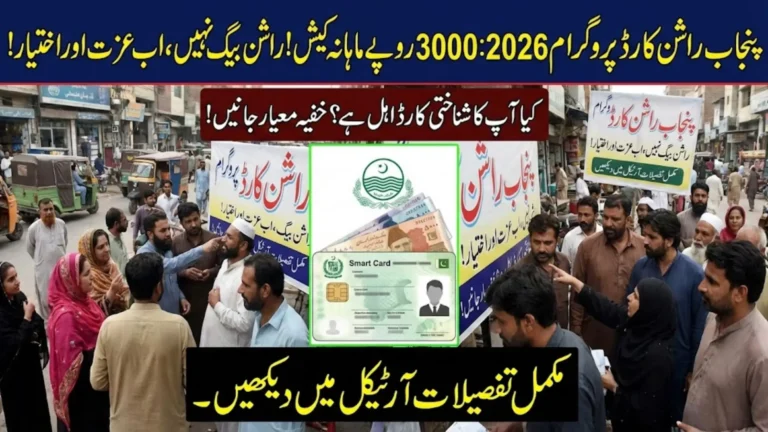
Ration Card Is Changing Household Survival Rising inflation and increasing food prices have made it difficult for millions of families in Punjab to manage their daily kitchen expenses. In response to these growing challenges, the Government of Punjab has strengthened its social welfare efforts through the CM Punjab Ration (Rashan) Card Program 2026, a continuation and expansion of a landmark initiative launched under the leadership of Chief Minister Maryam Nawaz. This program is designed to protect low-income and deserving households from food insecurity by providing direct monthly financial assistance through a transparent and digital system.

مہنگائی میں مسلسل اضافے اور روزمرہ اشیائے خورونوش کی بڑھتی ہوئی قیمتوں نے پنجاب کے لاکھوں کم آمدنی والے خاندانوں کے لیے زندگی کو مشکل بنا دیا ہے۔ ایسے حالات میں حکومتِ پنجاب نے عوام کو ریلیف فراہم کرنے کے لیے وزیراعلیٰ پنجاب مریم نواز کی قیادت میں راشن کارڈ پروگرام 2026 کو جاری اور مزید مؤثر بنایا ہے۔ یہ پروگرام غریب اور مستحق خاندانوں کو خوراک کے بنیادی اخراجات پورے کرنے میں مدد دیتا ہے اور صوبے بھر میں فوڈ سیکیورٹی کو یقینی بنانے کی ایک سنجیدہ کوشش ہے۔

The Punjab Ration Card Program was initially launched on 29 April 2025, and after its successful implementation, it has been carried forward into 2026 with improved coverage, better verification, and a stronger digital framework. In the first phase, 1.25 million (12.5 lakh) families across Punjab are being supported, with future expansion planned based on verified data and available budget. The core purpose of this program is not charity, but empowerment allowing families to meet their essential food needs with dignity and choice.

یہ پروگرام پہلی بار 29 اپریل 2026 کو متعارف کروایا گیا تھا اور اب 2026 میں اسے مزید بہتر نظام اور شفاف طریقۂ کار کے ساتھ جاری رکھا جا رہا ہے۔ اس اسکیم کے پہلے مرحلے میں 12.5 لاکھ (1.25 ملین) خاندانوں کو شامل کیا گیا ہے، جبکہ آئندہ مراحل میں مستحق خاندانوں کی تعداد میں اضافہ بھی متوقع ہے۔ اس پروگرام کے تحت اہل خاندانوں کو ہر ماہ 3,000 روپے کی مالی امداد ایک ڈیجیٹل اسمارٹ راشن کارڈ کے ذریعے فراہم کی جاتی ہے، جسے وہ یوٹیلیٹی اسٹورز اور رجسٹرڈ کریانہ دکانوں پر استعمال کر سکتے ہیں۔

Punjab Rs. 3,000 Monthly Food Support Plan 2026: How the New Ration Card Is Changing Household Survival

YOU CAN ALSO READ: Chief Minister Punjab Hi Tech Farm Mechanization Finance Program For 30 Million Loan To Farmers Full Detail

What Is the CM Punjab Ration Card Program 2026?

The CM Punjab Ration Card Program 2026 is a cash-based food assistance initiative that provides Rs. 3,000 per month to eligible families through a digital smart card. Instead of distributing fixed ration bags, the government has shifted to a modern system where beneficiaries can purchase groceries of their own choice from utility stores and registered karyana shops.

This approach not only reduces corruption and long waiting lines but also respects the independence of families by allowing them to decide how to spend their food allowance. The program is backed by a Rs. 40 billion budget, making it one of the largest provincial food support schemes in Pakistan.

راشن کارڈ پروگرام 2026 کا بنیادی مقصد صرف امداد دینا نہیں بلکہ خاندانوں کو باعزت طریقے سے اپنی ضروریات پوری کرنے کا اختیار دینا ہے۔ روایتی راشن تقسیم کے نظام کے برعکس، اس ڈیجیٹل نظام میں مستحق افراد خود فیصلہ کرتے ہیں کہ وہ کون سی اشیاء خریدنا چاہتے ہیں، جس سے نہ صرف سہولت بڑھتی ہے بلکہ وقت اور عزت نفس دونوں محفوظ رہتے ہیں۔ حکومت پنجاب نے اس منصوبے کے لیے 40 ارب روپے کا بجٹ مختص کیا ہے، جو اسے صوبے کی سب سے بڑی سماجی فلاحی اسکیموں میں شامل کرتا ہے۔

اس پروگرام کے لیے اہلیت کے اصول واضح اور شفاف رکھے گئے ہیں۔ درخواست گزار کا پنجاب کا مستقل رہائشی ہونا ضروری ہے اور اس کا پنجاب سوشیو اکنامک رجسٹری (PSER) میں اندراج ہونا لازمی ہے۔ نادرا سے جاری شدہ درست شناختی کارڈ اور اسی شناختی کارڈ پر رجسٹرڈ موبائل نمبر ہونا بھی شرط ہے۔ ایسے خاندان جن کی ماہانہ آمدن 50 ہزار روپے سے کم ہے اور جن کا پی ایم ٹی اسکور 35 سے نیچے ہے، وہ اس پروگرام کے لیے اہل ہیں۔ سرکاری ملازمین اس اسکیم میں شامل نہیں، جبکہ نان ٹیکس فائلرز اور جائیداد نہ رکھنے والے افراد بھی درخواست دے سکتے ہیں۔ ایک خاندان سے صرف ایک فرد ہی درخواست جمع کرا سکتا ہے تاکہ دوہری رجسٹریشن سے بچا جا سکے۔

وہ خاندان جو پہلے ہی بینظیر انکم سپورٹ پروگرام سے فائدہ حاصل کر رہے ہیں، اس راشن کارڈ پروگرام میں شامل نہیں کیے جاتے تاکہ امداد زیادہ سے زیادہ نئے مستحق خاندانوں تک پہنچ سکے۔ اسی طرح نگہبان رمضان پیکیج سے مستفید ہونے والے خاندانوں کو دوبارہ درخواست دینے کی ضرورت نہیں ہوتی کیونکہ ان کا ڈیٹا پہلے سے تصدیق شدہ ہوتا ہے، البتہ انہیں اپنی معلومات اپ ڈیٹ رکھنے کی ہدایت کی جاتی ہے۔

راشن کارڈ پروگرام 2026 کے لیے درخواست دینے کا طریقہ کار آسان رکھا گیا ہے۔ آن لائن درخواست PSER رجسٹریشن کے ذریعے دی جا سکتی ہے، جبکہ آف لائن درخواست کے لیے یونین کونسل دفاتر، ای خدمت مراکز اور سرکاری ٹیموں کے ذریعے گھر گھر سروے کا انتظام بھی موجود ہے۔ درخواست کے کسی بھی مرحلے پر کوئی فیس یا چارجز نہیں لیے جاتے، اور عوام کو ہدایت کی جاتی ہے کہ کسی ایجنٹ یا فرد کو رقم ادا نہ کریں۔

درخواست جمع ہونے کے بعد سرکاری ادارے فراہم کردہ معلومات کی جانچ پڑتال کرتے ہیں۔ اہل قرار پانے والے خاندانوں کو تصدیقی پیغام موصول ہوتا ہے اور ان کے راشن کارڈ میں ماہانہ 3,000 روپے منتقل کر دیے جاتے ہیں۔ اس رقم سے وہ باقاعدہ رجسٹرڈ دکانوں سے آٹا، چاول، چینی، گھی اور دیگر ضروری اشیاء خرید سکتے ہیں۔

پنجاب راشن کارڈ پروگرام 2026 نہ صرف غریب خاندانوں کے لیے مالی سہارا ہے بلکہ یہ معاشرتی استحکام کی طرف ایک اہم قدم بھی ہے۔ اس پروگرام سے غذائی قلت میں کمی، غربت کے دباؤ میں کمی اور گھریلو سطح پر سکون میں اضافہ ہو رہا ہے۔ خواتین کی سربراہی میں چلنے والے گھرانوں، یومیہ اجرت پر کام کرنے والے مزدوروں اور بزرگ شہریوں کے لیے یہ اسکیم خاص طور پر فائدہ مند ثابت ہو رہی ہے۔

آخر میں کہا جا سکتا ہے کہ پنجاب راشن کارڈ پروگرام 2026 ایک جدید، شفاف اور باعزت فلاحی نظام کی بہترین مثال ہے۔ ڈیجیٹل ٹیکنالوجی کے استعمال سے حکومت پنجاب نے یہ ثابت کیا ہے کہ درست منصوبہ بندی اور شفاف عمل کے ذریعے عوامی مسائل کا مؤثر حل ممکن ہے، اور یہ پروگرام مستقبل میں پنجاب کے لیے ایک مضبوط سماجی تحفظ کا ستون بن

YOU CAN ALSO READ: cmhightech.punjab.gov.pk Portal: How Farmers Can Register Online In 2026 Step-by-Step Method

Why the Ration Card Program Matters in 2026

In 2026, economic pressure on low-income households remains a serious concern. Daily wage earners, laborers, widows, and underprivileged families often struggle to balance food costs with other necessities such as rent, electricity, healthcare, and education. The Punjab Ration Card Program directly addresses this issue by easing the burden of monthly grocery expenses.

By providing regular financial assistance, the program helps families maintain food stability throughout the month, reduces dependence on loans, and lowers the risk of hunger. It also plays an important role in stabilizing communities by supporting local retail markets and encouraging lawful, documented transactions.

Key Features of the Punjab Ration Card 2026

One of the strongest aspects of the program is its simple yet effective structure. Eligible families receive a fixed monthly amount that can be used only for purchasing essential household items. The use of a digital smart card ensures transparency, accurate record-keeping, and protection against misuse.

The card can be used at government-approved outlets, including utility stores and registered private shops. Beneficiaries do not need to stand in long queues or depend on middlemen. Every transaction is digitally recorded, allowing families to track their remaining balance and the government to monitor distribution fairly.

Who Is Eligible for the CM Punjab Ration Card 2026?

To ensure that support reaches only deserving households, the Punjab Government has set clear and transparent eligibility criteria. Applicants must be permanent residents of Punjab and registered in the Punjab Socio-Economic Registry (PSER). A valid CNIC issued by NADRA and a mobile number registered on the same CNIC are mandatory requirements.

Households with a monthly income below Rs. 50,000 and a PMT (Proxy Means Test) score below 35 qualify for the program. Government employees are excluded, while non-tax filers and families without property are allowed to apply. Only one person per family can submit an application to prevent duplication.

Families already benefiting from BISP (Benazir Income Support Program) are not eligible, as the government aims to distribute aid fairly across different welfare schemes.

YOU CAN ALSO READ: Basant 2026 in Lahore: A Historic Spring Festival Returns Under New Safety Rules

Special Consideration for Nigehban Program Beneficiaries

Families that were part of the Nigehban Ramadan Package do not need to apply again for the Punjab Ration Card Program 2026. Their data has already been collected, verified, and included in the system. This decision saves time, avoids duplicate records, and ensures faster delivery of assistance.

However, such families are advised to keep their personal and household information updated to prevent delays or verification issues.

How to Apply for the Punjab Ration Card Program 2026

The application process for the CM Punjab Ration Card 2026 has been kept simple and accessible, offering both online and offline options. Online applications are submitted through PSER registration, where applicants provide details about family members, income, education, health, residence, and assets.

For those who are not comfortable with online systems, offline registration is available through Union Council offices, e-Khidmat Markaz, and door-to-door PSER surveys conducted by government teams. These methods ensure that even the most vulnerable and digitally disconnected families are not left out.

Importantly, no application or processing fee is charged at any stage, and citizens are strongly advised not to pay money to anyone claiming to speed up the process.

YOU CAN ALSO READ: 8171 Digital Relief Window 2026: CNIC Validation for Family Support Grant

What Happens After Registration?

Once an application is submitted, the provided data is reviewed and verified by relevant government departments. If the household meets all eligibility requirements, the applicant receives a confirmation notification via SMS or official channels. After approval, Rs. 3,000 per month is credited to the beneficiary’s digital ration card.

This assistance continues on a monthly basis, helping families plan their grocery expenses with greater confidence and stability.

How to Use the Punjab Rashan Card

Using the ration card is straightforward. Beneficiaries can visit any registered utility store or approved karyana shop, present their CNIC for verification, and purchase groceries within their monthly limit. The deducted amount is automatically adjusted, and families can monitor their remaining balance through official sources.

This system removes the stress and uncertainty often associated with traditional ration schemes and ensures a respectful experience for beneficiaries.

Social and Economic Impact of the Program

The CM Punjab Ration Card Program 2026 is more than just financial assistance it is a social protection mechanism. By ensuring regular access to food, the program helps improve nutrition levels, reduces extreme poverty risks, and supports household stability. Women-led households, daily wage workers, and elderly citizens benefit significantly from this consistent support.

At the same time, local shopkeepers and small retailers gain from increased customer activity, creating a positive cycle within the local economy.

Final Thoughts

The CM Punjab Ration Card Program 2026 represents a modern, transparent, and dignified approach to social welfare. By shifting from traditional ration distribution to digital financial assistance, the Punjab Government has taken a major step toward effective poverty relief and food security. With clear eligibility rules, multiple registration options, and strong monitoring, the program stands as a practical solution to one of the most pressing challenges faced by low-income families today. As the program expands further, it has the potential to become a long-term pillar of social protection across Punjab.

YOU CAN ALSO READ: A New Welfare Architecture in Punjab: Understanding the 2026 Poverty Relief Framework
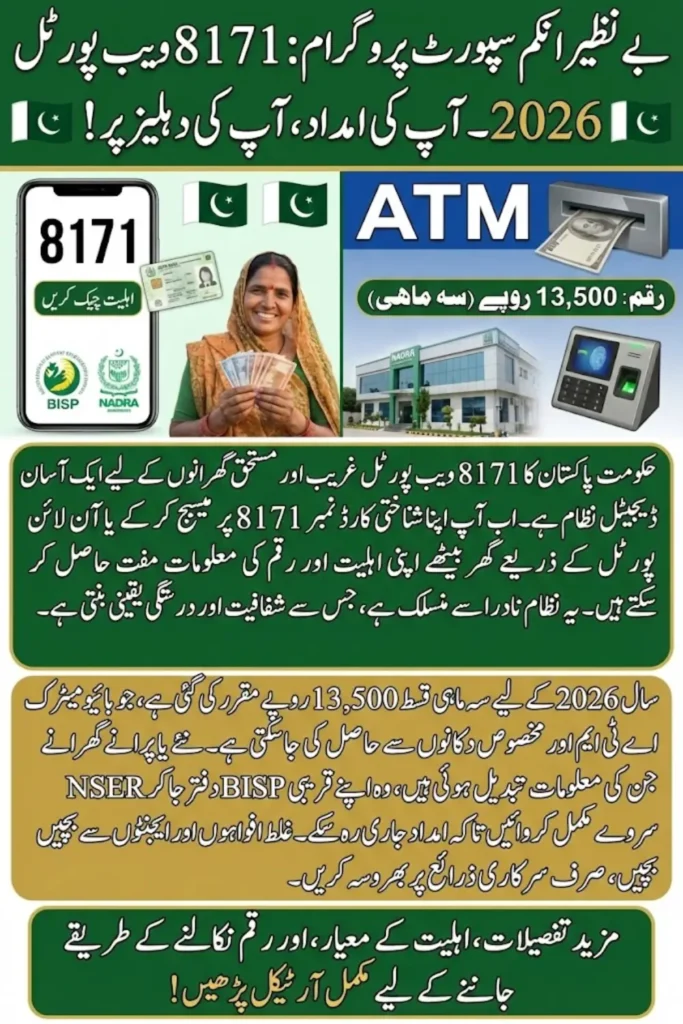
BISP 8171 Web Portal 2026: Online CNIC Check, Payment Schedule and Updates

BISP 8171 Web Portal 2026: Online CNIC Check, Payment Schedule and Updates

BISP 8171 Web Portal

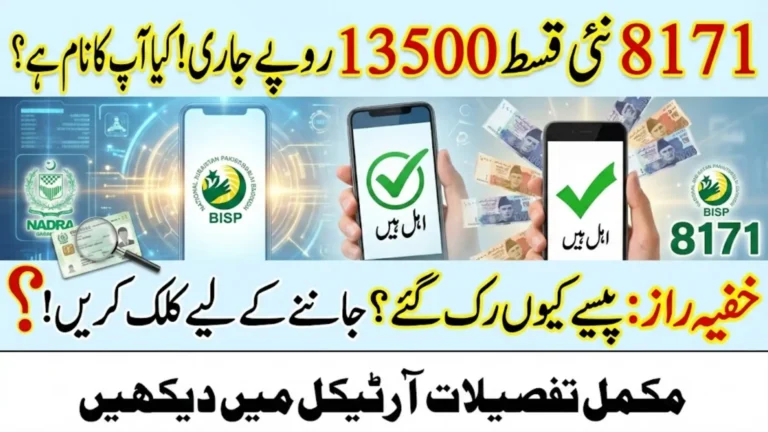
The 8171 Web Portal 2026 is the official digital platform of the Benazir Income Support Program, designed to help low-income households check eligibility, payment status, and verification details using a CNIC number. This system has been introduced to ensure transparency, reduce physical visits, and provide equal access to information across Pakistan.

The portal works nationwide and supports both online and SMS-based verification. It is directly linked with NADRA and the National Socio-Economic Registry, which allows the government to verify household data accurately before approving any financial assistance.

YOU CAN ALSO READ: CM Punjab High-Tech Farm Mechanization Finance Program 2026 A Complete Informational Guide

  • Centralized system for eligibility and payments
  • Accessible through mobile and computer
  • Linked with NADRA and NSER for verification

What Is the 8171 Web Portal and How It Functions

The 8171 Web Portal acts as a single window for BISP-related information. Citizens can check whether they qualify for financial assistance, confirm payment release, or identify if further verification is required. This eliminates the need for agents or unofficial sources.

The system automatically matches CNIC data with government records. Once the information is verified, the eligibility result is displayed instantly, ensuring accuracy and reducing errors in beneficiary selection.

  • Automated CNIC verification
  • Instant eligibility results
  • No service charges involved
BISP 8171 Web Portal 2026: Online CNIC Check, Payment Schedule and Updates

8171 BISP CNIC Check via SMS

The SMS method is a simple way to check BISP eligibility without internet access. This service is especially useful for people living in rural or remote areas where online access is limited.

YOU CAN ALSO READ: 8070 Ramzan Relief Package 2026: Complete Guide to Punjab Cash and Free Rashan Support

By sending a CNIC number to 8171, the system retrieves household data from NADRA and sends a confirmation message. This process works on any mobile phone and does not require registration.

  • Works without internet
  • Uses official 8171 shortcode
  • Supports basic mobile phones

8171 Web Portal 2026 Online CNIC Check Process

The online CNIC check through the 8171 Web Portal 2026 provides a fast and reliable way to confirm eligibility. Users simply enter their CNIC number and a security code to view their status.

This method is free of cost and provides instant results. It is suitable for beneficiaries who want detailed information without relying on SMS responses.

  • Secure captcha-based system
  • Real-time eligibility display
  • Accessible 24/7

BISP Eligibility Criteria 2026

The Government of Pakistan applies strict eligibility filters to ensure that financial assistance reaches deserving households only. These filters are based on income level, assets, and employment status.

Applicants who meet the defined socioeconomic thresholds are approved, while those with higher income or government employment are excluded.

  • Income below Rs. 25,000
  • No government job in household
  • No major assets or vehicles

BISP Registration and NSER Dynamic Survey

Registration for BISP is linked with the NSER Dynamic Survey, which collects updated household information. Families who have never been surveyed or whose circumstances have changed must complete this process.

The survey ensures that the PMT score reflects the current financial condition of the household. Without this survey, eligibility cannot be confirmed.

YOU CAN ALSO READ: 8171 Registration Form Online Apply 2026 CNIC Verification, PMT Score and BISP Rs. 13,500 Explained

  • Conducted at BISP Tehsil Offices
  • Required for new and updated cases
  • Determines PMT score

How the 8171 Eligibility Verification System Works

After a CNIC is submitted, the system verifies identity through NADRA. It then checks income indicators, assets, travel history, and employment records to assess eligibility.

If all conditions are met, the system approves the applicant and sends a confirmation message. If not, the process ends automatically without manual intervention.

  • NADRA-linked verification
  • Automated eligibility screening
  • Transparent approval process

BISP Payment Schedule and Amount for February 2026

For 2026, the official quarterly BISP payment has been set at Rs. 13,500. Payments are released in phases to manage crowds and ensure smooth disbursement.

February 2026 marks one of the scheduled payment months. Beneficiaries are advised to check their status before visiting payment centers.

  • Quarterly payment structure
  • Phased district-wise release
  • Official amount Rs. 13,500
Payment DetailInformation
ProgramBISP Kafalat
Payment AmountRs. 13,500
Payment MonthFebruary 2026
VerificationCNIC via 8171

YOU CAN ALSO READ: Toyota Fortuner 2026 Revealed: Features, Price, Specs, Mileage and Full Review

Scam Alerts and False Payment Claims

False news about double payments or extra cash grants often circulates on social media. These claims are not approved by BISP officials and are used to mislead citizens.

Beneficiaries should only trust messages received from the official 8171 shortcode and avoid sharing CNIC details with unknown sources.

  • No double payment approved
  • Avoid unofficial calls or messages
  • Use only official platforms

How to Withdraw BISP Payments

After eligibility confirmation, beneficiaries can withdraw their payments through authorized channels. These include biometric ATMs and designated retailer shops.

Biometric verification ensures that payments are delivered securely and without deductions.

  • HBL biometric ATMs
  • Authorized retailer shops
  • CNIC-based verification

Checking PMT Score Through 8171

The PMT score determines whether a household qualifies for BISP assistance. It is calculated based on income, assets, and family size recorded during the NSER survey.

YOU CAN ALSO READ: Honda Civic 2026 Facelift Launched in Pakistan: Prices, Features and Real-World Review

Beneficiaries can check their PMT-based eligibility through the 8171 Web Portal or SMS service.

  • Reflects household poverty level
  • Linked with NSER data
  • Determines eligibility status

Linked Programs Under the 8171 System

The 8171 platform also supports multiple welfare initiatives such as Ehsaas Kafalat, Taleemi Wazaif, Nashonuma, and Amdan programs. These initiatives address education, nutrition, and income generation needs.

Eligibility for these programs is often linked with BISP status, ensuring integrated social support.

  • Education stipends
  • Nutrition support
  • Income generation assistance

Digital Payments and Security Measures

In 2026, BISP has strengthened its payment system by introducing biometric and bank-linked disbursements. This reduces fraud and ensures full payment delivery.

Digital wallets and banking channels are being gradually implemented to improve convenience for beneficiaries.

  • Biometric verification
  • Direct-to-bank payments
  • Reduced risk of deductions

Common Issues and Practical Solutions

Some beneficiaries face issues such as biometric failure, expired CNICs, or outdated survey data. These problems usually prevent payment release.

Most issues can be resolved by updating records at NADRA or visiting a BISP office for re-verification.

  • Update CNIC details
  • Complete NSER survey
  • Avoid agents and fees

YOU CAN ALSO READ: Negahban Ramzan Package 2026 Eligibility Check, Online Registration and 8070 Muft Atta Complete Guide

Importance of Using Official 8171 Platforms

Using official platforms protects beneficiaries from fraud and misinformation. All BISP services are free, and no agent is authorized to charge fees.

Relying on the 8171 Web Portal ensures accurate information and secure access to benefits.

  • Free official services
  • Protection from scams
  • Reliable information source

Conclusion

The 8171 Web Portal 2026 has become a vital tool for delivering transparent and efficient financial assistance under BISP. With improved verification systems, secure payments, and nationwide access, it supports millions of deserving households.

By keeping CNIC information updated and using only official channels, beneficiaries can ensure uninterrupted support and avoid common issues.

FAQs

What is the 8171 Web Portal 2026 used for?
It is used to check BISP eligibility, payment status, and verification details using a CNIC number.

How can I check BISP eligibility through CNIC?
You can check eligibility by sending your CNIC to 8171 or by using the official 8171 web portal online.

What is the BISP payment amount for 2026?
The official quarterly BISP payment amount for 2026 is Rs. 13,500.

Is there an online registration form for BISP?
No, registration is done through the NSER Dynamic Survey at BISP Tehsil Offices.

How are BISP payments distributed?
Payments are distributed through biometric ATMs, authorized retailer shops, and bank-linked channels.

YOU CAN ALSO READ: How the Punjab Rozgar Scheme 2026 Is Helping Young Entrepreneurs Start Their Own Business

Benazir Kafalat Program Aprail 2026 Cluster Distribution Plan Released Check Full Details

Benazir Kafalat Program Aprail 2026 Cluster Distribution Plan Released Check Full Details

Benazir Kafalat Program April

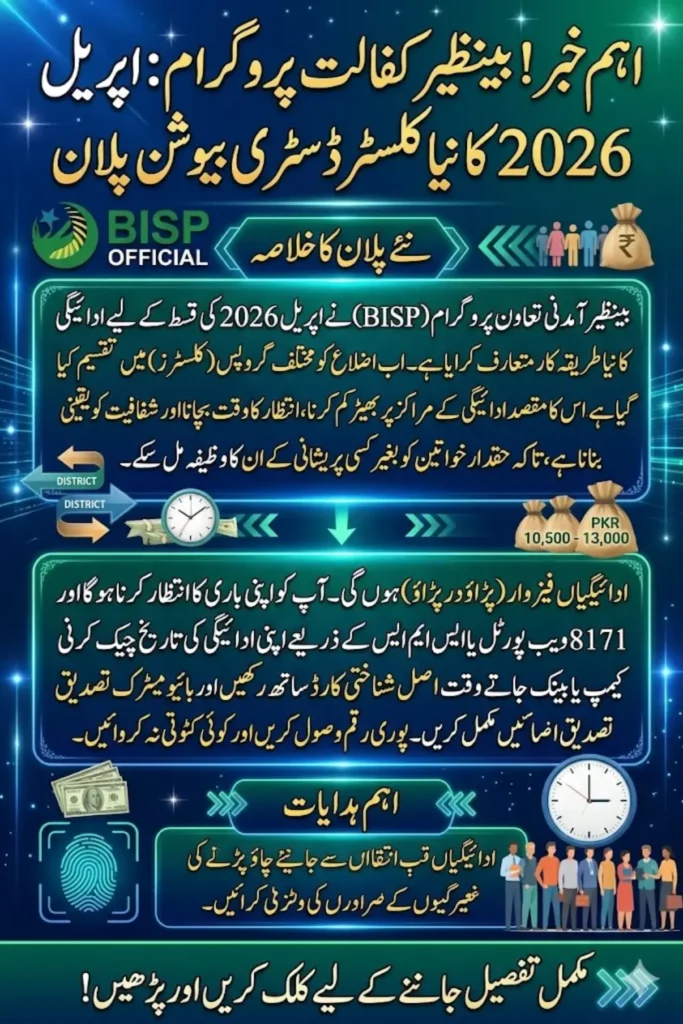
The Benazir Kafalat Program continues to serve as one of Pakistan’s most important financial assistance initiatives for low-income families. In April 2026, the government officially introduced a new Cluster Distribution Plan to improve payment transparency, reduce crowd pressure, and ensure the timely disbursement of funds to eligible women.

This updated distribution model is designed to make the process smoother for beneficiaries across urban and rural areas. If you are already registered or planning to check your eligibility, understanding this cluster-based system is essential.

Benazir Kafalat Program Aprail 2026 Cluster Distribution Plan Released Check Full Details

BISP Benazir Kafaalat Rs. 13,500 Payment Schedule 2026 Full Update

What Is the Benazir Kafalat Program?

The Benazir Kafalat Program is a financial assistance scheme under the Benazir Income Support Programme (BISP). It provides quarterly cash payments to deserving women from low-income households across Pakistan.

The primary goal of the program is to:

  • Reduce poverty at the household level
  • Support women financially
  • Improve access to basic necessities
  • Strengthen social protection coverage

Payments are issued after verification through the National Socio-Economic Registry (NSER). Only eligible families with verified records receive financial support.

Maryam Ko Batain Rs 10,000 2026: Your Complete Guide to Fast and Secure JazzCash Payment

Why the April 2026 Cluster Distribution Plan Was Introduced

In previous payment cycles, beneficiaries often faced long queues, overcrowded payment centers, and delays. Many districts experienced operational challenges due to high turnout on the same days.

The April 2026 Cluster Distribution Plan was introduced to solve these problems. Under this system, districts are divided into clusters. Each cluster receives payments according to a scheduled phase instead of distributing funds nationwide at once.

This strategy helps:

  • Reduce overcrowding at payment camps
  • Improve security and monitoring
  • Ensure faster complaint resolution
  • Provide better coordination with partner banks

By spreading the distribution across clusters, authorities can manage the process more efficiently.

How the Cluster System Works

The new system groups districts into different clusters. Each cluster is assigned specific payment dates. Beneficiaries in those districts are informed when their payment window opens.

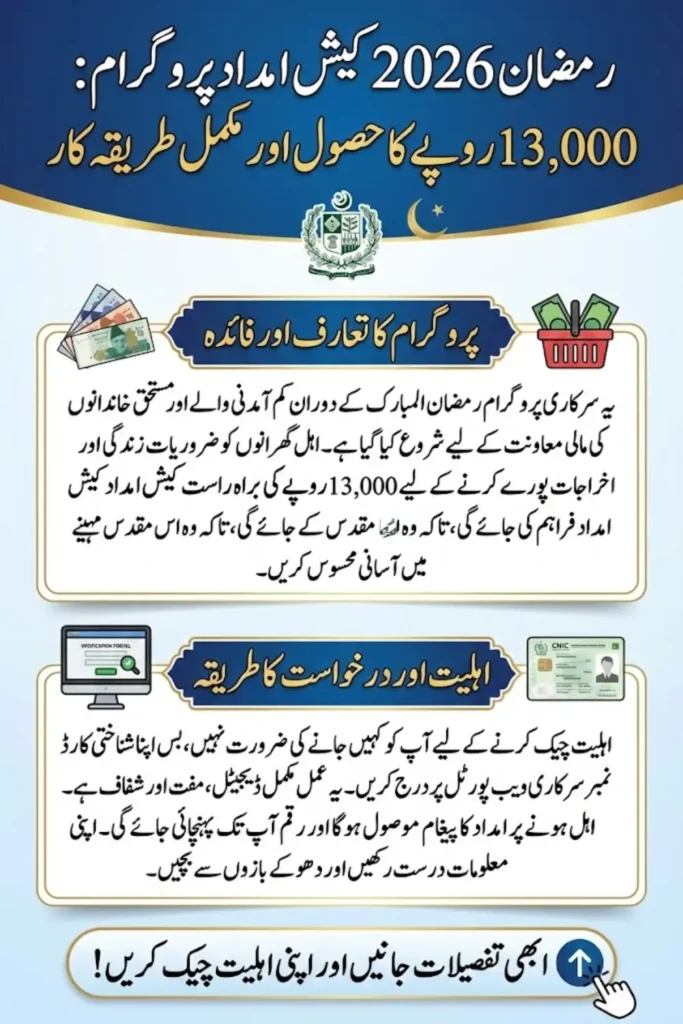
Ramzan 2026 Family Support Cash Program: Apply Online and Receive Funds Fast

Here is a simplified overview of how it operates:

PhaseCluster CoveragePayment StatusMonitoring Level
Phase 1Selected districts (early release)ActiveHigh
Phase 2Additional grouped districtsScheduledModerate
Phase 3Remaining districtsPending announcementStandard

Each cluster moves to the next stage only after the previous cluster’s payments are completed and verified.

This structured rollout prevents system overload and ensures smoother operations at payment sites.

Who Is Eligible for April 2026 Payment?

Eligibility criteria remain based on NSER data and BISP verification. However, beneficiaries must meet specific conditions to receive the April 2026 installment.

You are eligible if:

  • Your household is registered in NSER
  • Your poverty score meets the approved threshold
  • You have completed biometric verification
  • Your CNIC is valid and not expired
  • You have not been disqualified due to updated income data

If your record has changed or your household income has increased significantly, your eligibility may be reviewed.

8070 Ramzan Package Online Registration, CNIC Check & Rs 10,000 Payment Details 2026

How to Check Your Payment Status

Beneficiaries can confirm their payment status through official verification methods. Always rely on authorized channels to avoid fraud.

Follow these steps:

  1. Open the official BISP 8171 web portal.
  2. Enter your 13-digit CNIC number without spaces.
  3. Complete the captcha verification.
  4. Click on the check button.
  5. Review your eligibility and payment status on the screen.

Alternatively, you can send your CNIC number via SMS to 8171 from your registered mobile number.

If your cluster’s payment phase is active, your message will confirm the payment release date.

Payment Amount for April 2026

The quarterly payment amount for the April 2026 cycle remains consistent with the latest announced rate. Beneficiaries will receive financial assistance according to the approved installment.

Below is a structured summary:

CategoryPayment Amount (PKR)Frequency
Standard Beneficiary10,500 – 13,000Quarterly
Additional Support (if eligible)VariesConditional

The exact amount may depend on updated government revisions and additional program components.

Wazir-e-Azam Relief Package Complete Registration Process & Latest Payment Update 2026

Beneficiaries should collect the full amount and ensure they receive a printed receipt after biometric verification.

Where Payments Will Be Distributed

Payments will be distributed through designated camps, partner banks, and authorized payment centers. In many districts, biometric verification devices are installed on-site.

Common payment channels include:

  • Temporary BISP camp sites
  • Bank-affiliated agents
  • Registered franchise outlets
  • Mobile payment units in remote areas

Beneficiaries must bring their original CNIC. Without biometric verification, payment cannot be issued.

Important Instructions for Beneficiaries

To avoid complications, follow these guidelines during the April 2026 distribution cycle:

  • Visit the payment center only when your cluster is active
  • Carry your original CNIC
  • Do not pay any agent or middleman
  • Count your money before leaving the counter
  • Report deductions immediately

If anyone demands a service fee, you should file a complaint at the official helpline or complaint desk available at camps.

8171 Program New Update Announced: Check Eligibility, Complete Survey & Confirm Your Payment Status

What to Do If Payment Is Delayed

If your cluster phase has started but you have not received payment confirmation, take the following steps:

  1. Recheck your status through 8171.
  2. Confirm your CNIC validity.
  3. Visit the nearest BISP office for record verification.
  4. Update biometric data if required.

Sometimes payments are delayed due to fingerprint mismatch or incomplete records. Resolving these issues early prevents further delays.

Common Reasons for Disqualification

Some beneficiaries may find their status marked as ineligible. This usually happens due to updated household data or changes to system verification.

Possible reasons include:

  • Increased income record in the government database
  • Property ownership data update
  • Family member employed in government service
  • Invalid or expired CNIC
  • Duplicate record detection

If you believe your disqualification is incorrect, you can request a re-survey through the nearest BISP office.

BISP Launches Digital Dashboard to Monitor Benazir Nashonuma Program and Tackle Child Malnutrition Across Pakistan

Benefits of the Cluster-Based Model

The April 2026 Cluster Distribution Plan is not just a scheduling change. It introduces several operational improvements that directly benefit recipients.

Key advantages include:

  • Shorter waiting times
  • Reduced overcrowding
  • Better crowd management
  • Improved transparency
  • Faster issue resolution

Authorities can also monitor fund distribution more accurately, minimizing the risk of irregularities.

Role of Biometric Verification

Biometric verification remains a critical part of the program. It ensures that funds are delivered directly to the rightful beneficiary.

If fingerprints do not match, you may need to:

  • Update biometric data through NADRA
  • Verify family records
  • Request alternate verification methods (where allowed)

This system protects beneficiaries from fraud and prevents unauthorized withdrawals.

PSER Registration Open for Punjab Ration Card Monthly Grocery Support Program Details

How the New Plan Improves Transparency

Transparency has always been a challenge in large-scale welfare programs. The cluster system introduces better tracking and supervision at every stage.

Officials can now:

  • Track payments cluster by cluster
  • Monitor complaints in real time
  • Analyze distribution performance
  • Deploy additional staff where needed

This data-driven approach ensures accountability and builds trust among beneficiaries.

Final Words

The Benazir Kafalat Program April 2026 Cluster Distribution Plan marks a significant improvement in the delivery of financial assistance across Pakistan. By dividing districts into organized clusters, the government has reduced operational pressure and improved efficiency.

Beneficiaries should carefully check their cluster schedule, verify eligibility through official channels, and follow proper instructions during payment collection. Staying informed helps avoid delays and prevents fraud.

If you are eligible, ensure your records are updated, your CNIC is valid, and your biometric verification is complete. The new system is structured to serve deserving families more effectively, and understanding how it works will help you receive your payment smoothly and without complications.

YOU CAN ALSO READ: BISP Benazir Kafaalat Rs. 13,500 Payment Schedule 2026 Full Update

BISP Benazir Kafaalat Rs. 13,500 Payment Schedule 2026 Full Update

BISP Benazir Kafaalat Rs. 13,500 Payment Schedule 2026 Full Update

BISP Benazir Kafaalat

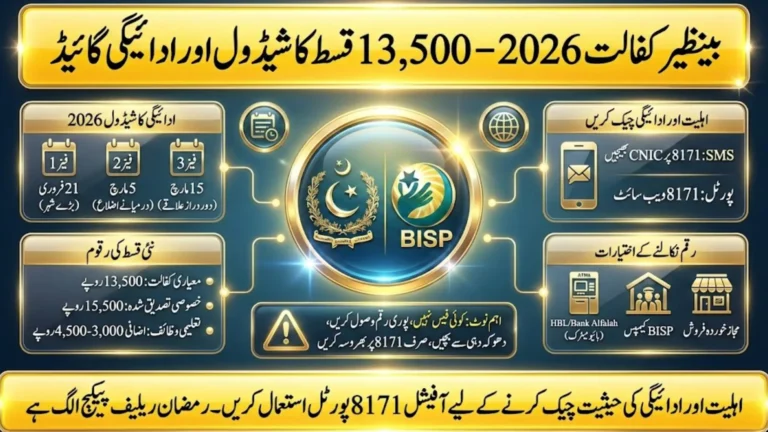
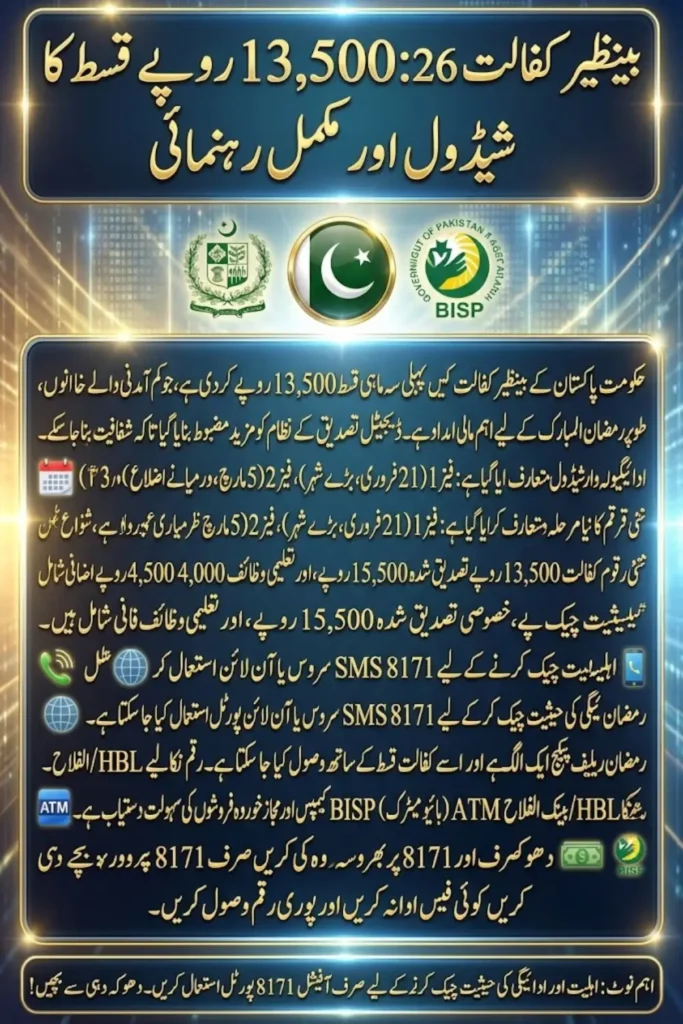
The Government of Pakistan has launched the first quarterly BISP Benazir Kafaalat installment of Rs. 13,500 for 2026, offering crucial financial support to low-income families. This initiative is particularly important as the holy month of Ramadan approaches, helping millions manage household expenses. Beneficiaries can now check their eligibility and payment status through the official 8171 portal from home, reducing the need to visit payment centers.

In 2026, BISP has also strengthened digital verification mechanisms to ensure that the stipend reaches only eligible households. The updated system prevents fraudulent claims and unauthorized deductions, making the process more transparent and efficient.

Updated Installment Schedule for 2026

The government has introduced a district-wise phased payment system to avoid congestion at payment points. This method ensures smooth disbursement for both urban and rural areas, covering all provinces.

YOU CAN ALSO READ: Ramzan 2026 Family Support Cash Program: Apply Online and Receive Funds Fast

BISP Benazir Kafaalat Rs. 13,500 Payment Schedule 2026 Full Update

Payments will continue throughout Ramadan, reaching an estimated 9.3 million beneficiaries nationwide. Families can plan withdrawals according to the following timeline:

Payment Timeline Table:

PhaseStart DateCoverage Area
Phase 1February 21, 2026Major cities: Lahore, Karachi, Peshawar, Quetta
Phase 2March 5, 2026Mid-sized districts & rural hubs
Phase 3March 15, 2026Remaining tehsils & remote regions

Key Points:

  • Phased release reduces overcrowding.
  • Payments are spread across the entire month of Ramadan.
  • Beneficiaries in remote areas receive special arrangements.

New Payment Amounts How Much Will You Receive?

The standard quarterly stipend has been increased in 2026 to help families cope with inflation. The total amount varies depending on the category and region of the household.

Installment Amount Table:

CategoryMonthly EquivalentQuarterly Payment
Standard KafaalatRs. 4,500Rs. 13,500
Special Verified (Remote)Rs. 5,166Rs. 15,500
Educational WazaifVariableAdditional Rs. 3,000–4,500

YOU CAN ALSO READ: 8070 Ramzan Package Online Registration, CNIC Check & Rs 10,000 Payment Details 2026

Important Notes:

  • Any payment above Rs. 13,500 includes Benazir Taleemi Wazaif for school-going children.
  • Special verified households in remote areas receive higher stipends.
  • Educational wazaif payments are in addition to the standard installment.

How to Verify Your Payment Status

Checking your payment is simple and can be done without leaving home. BISP provides two reliable methods:

1. SMS Method:

  • Open your mobile SMS application.
  • Type your 13-digit CNIC number (without spaces or dashes).
  • Send it to 8171.
  • You will receive a reply showing your eligibility and installment status.

2. Online Portal Method:

  • Visit the official 8171 BISP Web Portal.
  • Enter your CNIC number and the captcha code.
  • Click “Check Eligibility” to see detailed payment information.

Points to Remember:

  • Always use the official 8171 portal for accurate information.
  • Avoid third-party apps or WhatsApp messages claiming to provide updates.
  • Keep your CNIC number handy for verification.

YOU CAN ALSO READ: Wazir-e-Azam Relief Package Complete Registration Process & Latest Payment Update 2026

Ramadan Relief 2026 Is It Separate?

Beneficiaries often ask whether the Ramadan Relief Package is included in the Kafaalat installment. The answer is no. Both are distinct programs designed to support families in different ways.

Comparison Table:

ProgramAmountPurpose
Kafaalat InstallmentRs. 13,500Regular quarterly support for basic needs
PM Ramadan PackageRs. 2,000–3,000 or subsidized rashanFederal relief during Ramadan
CM Punjab Nigehban CardRs. 10,000 or rashan hamperProvincial support for Punjab residents

Key Points:

  • Families can receive both Kafaalat and Ramadan relief simultaneously.
  • The Ramadan relief is often distributed through local camps or card-based systems.
  • This ensures vulnerable households get maximum support during the holy month.

Withdrawal Options in 2026

BISP has partnered with banks and authorized retailers to make withdrawals quick and convenient. Both urban and remote households can access their payments safely.

Withdrawal Options Table:

MethodDetails
HBL ATMsBiometric thumb verification
Bank Alfalah (Selected Areas)Biometric-enabled withdrawal
BISP CampsitesTehsil-level access points
Authorized RetailersLocal market shops partnered with BISP

YOU CAN ALSO READ: 8171 Program New Update Announced: Check Eligibility, Complete Survey & Confirm Your Payment Status

Steps for Biometric Withdrawal:

  1. Select BISP/Kafaalat on the ATM.
  2. Enter your CNIC.
  3. Place your thumb on the biometric scanner.
  4. Collect the exact payment amount.

Points to Remember:

  • No fees are required for withdrawal.
  • Always check that the full stipend is received.
  • Report any deduction via the BISP helpline 0800-26477.

Common Reasons for Payment Delays

Sometimes, your payment may show “Under Verification” or “Ineligible” on 8171. This can happen due to multiple reasons:

Reasons Table:

ReasonDescription
Dynamic Survey PendingBeneficiaries must update NSER data every 3 years
Biometric MismatchHousehold income may exceed the eligibility threshold
PMT Score ChangeHousehold income may exceed eligibility threshold

Tips to Avoid Delays:

  • Keep your NSER profile up to date.
  • Visit NADRA if your biometric details are outdated.
  • Confirm your eligibility before visiting payment points.

YOU CAN ALSO READ: BISP Launches Digital Dashboard to Monitor Benazir Nashonuma Program and Tackle Child Malnutrition Across Pakistan

Tips to Protect Your Payment

Protecting your Kafaalat installment is crucial to avoid fraud. Follow these safety measures:

  • Official Communication Only: Only trust messages from 8171.
  • No Registration Fees: BISP services are free of cost.
  • Check Full Amount: Ensure the teller provides the full stipend.

Safety Points:

  • Never share your CNIC or OTP with anyone.
  • Report suspicious agents or deductions immediately.
  • Keep your contact details updated with BISP for SMS alerts.

FAQs

Q1: Can I register for BISP online in March 2026?
Yes, new applicants can register online or at local BISP centers with a valid CNIC and required documents.

Q2: How do I know if I am eligible for the Special Verified category?
This category is for households in remote or high-priority areas, verified via BISP surveys.

Q3: Can I receive both the Benazir Kafaalat installment and PM Ramadan relief?
Yes, both are separate programs, and eligible families can receive both payments simultaneously.

YOU CAN ALSO READ: PSER Registration Open for Punjab Ration Card Monthly Grocery Support Program Details

PSER Registration Open for Punjab Ration Card Monthly Grocery Support Program Details

PSER Registration Open for Punjab Ration Card Monthly Grocery Support Program Details

PSER Registration Open for Punjab Ration Card

The Government of Punjab has officially opened PSER Registration Open for Punjab Ration Card for families seeking support under the Punjab Ration Card monthly grocery assistance program. This initiative is aimed at helping low-income households manage the rising cost of living by providing consistent, structured financial relief for essential grocery items. With inflation affecting necessities across the province, many families are struggling to maintain a steady supply of food and basic household items.

The Punjab Socio-Economic Registry (PSER) ensures transparent identification of deserving families and fair distribution of benefits. By digitalizing the system, the government minimizes errors, reduces duplication, and improves efficiency, making it easier for eligible families to receive timely support.

YOU CAN ALSO READ: Maryam Ko Bataye Web Portal 2026: Online Registration & Rs 10,000 Ramadan Support

What is PSER and Why It Matters?

PSER, or Punjab Socio-Economic Registry, is a digital database managed by the Government of Punjab that collects economic and demographic data of households across the province. It is the foundation for several welfare programs and ensures that assistance reaches the people who genuinely need it.

PSER Registration Open for Punjab Ration Card Monthly Grocery Support Program Details

The registry helps the government:

  • Verify household eligibility for social programs
  • Prevent fraud and duplication of benefits
  • Build a comprehensive database for future support initiatives

By registering in PSER, families not only become eligible for the Punjab Ration Card but also lay the groundwork for access to other welfare programs in the province.

Overview of the Punjab Ration Card Program

The Punjab Ration Card program provides monthly grocery assistance to low-income families, ensuring they can meet basic nutritional needs. Eligible households receive support for essential food items such as flour, rice, sugar, cooking oil, pulses, and basic spices.

YOU CAN ALSO READ: Maryam Ko Batain Rs 10,000 2026: Your Complete Guide to Fast and Secure JazzCash Payment

Support is delivered in two ways:

MethodDescriptionBenefit
Subsidized PurchaseDiscounted groceries at registered storesImmediate savings on essential items
Direct Financial SupportMonthly credited subsidy amountFlexibility to buy groceries as needed

The program’s main goal is to prevent families from struggling to afford basic necessities while maintaining dignity and choice.

Who Can Apply? Eligibility Criteria

Eligibility is designed to prioritize families facing economic hardship. Those who can apply include low-income households, daily wage earners, unemployed individuals, widows, single mothers, persons with disabilities, and families already registered under other welfare schemes.

YOU CAN ALSO READ: Suzuki Cultus 2026 Pakistan Price, Specs, Mileage & Top Variants Guide

Applicants must meet the following criteria:

  • Be permanent residents of Punjab
  • Possess a valid CNIC
  • Not be government employees in most cases
  • Not own high-value assets or maintain significant bank balances

Authorities verify eligibility through PSER data and other government databases to ensure fair distribution of benefits.

Required Documents for Registration

To complete PSER registration, applicants should have the following documents ready:

  • Original CNIC
  • Mobile number linked to the CNIC
  • Proof of residence (if requested)
  • Family details (number of dependents)
  • Information on monthly household income

Providing accurate information is essential. Inaccurate or incomplete data can lead to delays or rejection. Clear documentation ensures faster verification and smooth processing.

YOU CAN ALSO READ: Ramzan 2026 Family Support Cash Program: Apply Online and Receive Funds Fast

Step-by-Step Guide to PSER Registration

The registration process is streamlined to help families register easily. First, visit the official PSER registration portal launched by the Punjab Information Technology Board, which is mobile-friendly and accessible to all.

Then follow these steps:

  1. Enter CNIC and mobile number
  2. Verify your number using OTP
  3. Fill in household details (family size, income, housing, utilities)
  4. Submit the application and save the tracking number

The application is then reviewed, and a verification SMS is sent to confirm submission.

How Verification Works

Once submitted, applications are screened digitally to assess eligibility. Authorities cross-check income data, property ownership, vehicle registration, and enrollment in other welfare programs.

Applicants approved for the program receive a confirmation SMS with instructions for receiving their benefits. Those who are rejected are given guidance for correcting errors or reapplying if eligible.

YOU CAN ALSO READ: 8070 Ramzan Package Online Registration, CNIC Check & Rs 10,000 Payment Details 2026

Monthly Grocery Support: How It Is Provided

Support under the Punjab Ration Card program is designed to be practical and flexible. Families can either buy groceries at subsidized rates through registered stores or receive a monthly financial credit to purchase items independently.

Key benefits include:

  • Ensuring access to basic food items
  • Reducing monthly household financial stress
  • Maintaining dignity and choice for families

The assistance method is communicated to beneficiaries via SMS, making it easier to plan monthly purchases.

Key Benefits of the Punjab Ration Card

The Punjab Ration Card program provides structured financial relief, helping families cope with rising grocery costs. Benefits include:

  • Reduced monthly household expenses
  • Transparent and traceable support through PSER
  • Elimination of middlemen in the subsidy system
  • Ability to track benefits via SMS

Even modest monthly support can significantly ease household budgeting and ensure consistent access to essential nutrition.

YOU CAN ALSO READ: Wazir-e-Azam Relief Package Complete Registration Process & Latest Payment Update 2026

Common Mistakes to Avoid During Registration

Several avoidable mistakes can delay or block registration:

  • Entering an incorrect CNIC number
  • Providing false income information
  • Using a non-registered mobile number
  • Submitting incomplete forms

Tips for success:

  • Double-check all information before submission
  • Keep all required documents ready
  • Accurately report the number of family members

Following these steps improves approval chances and reduces processing time.

How to Check Application Status

Once registered, applicants can track their application through the PSER portal, SMS updates, or designated helplines.

Keep your CNIC and tracking number handy. Status updates generally appear within days to a few weeks, depending on application volume, and provide clarity on next steps.

Transparency and Data Security

The Punjab Social Protection Authority manages the welfare database and ensures data security. PSER protects personal information through encrypted digital systems, biometric verification (when applicable), and measures to prevent duplicate entries.

Digital integration guarantees targeted subsidy distribution and helps the government plan long-term welfare initiatives more effectively, benefiting both administrators and beneficiaries.

Why This Program Is Important in 2026

With continued food inflation and rising utility costs, monthly relief programs like the Punjab Ration Card are essential for low-income families. The program provides structured support, ensuring that households can meet basic nutritional needs consistently.

Additionally, it strengthens social safety nets, reduces financial stress, and uses a data-driven approach to reach the most deserving families efficiently.

YOU CAN ALSO READ: 8171 Program New Update Announced: Check Eligibility, Complete Survey & Confirm Your Payment Status

FAQs

  • Is PSER registration mandatory? Yes, it is required for ration card eligibility.
  • Is there a registration fee? No, the process is completely free.
  • Can I reapply after rejection? Yes, if eligibility conditions change or errors are corrected.
  • How long does approval take? Usually, a few days to a few weeks, depending on workload.

Accurate documentation and careful submission speed up approval.

Practical Tips for Faster Approval

  • Register during non-peak hours to avoid portal delays
  • Use a stable internet connection
  • Keep all documents prepared beforehand
  • Review all fields carefully before submission

These simple steps reduce mistakes and make the approval process smoother.

Final Thoughts

PSER registration for the Punjab Ration Card provides low-income households with consistent monthly grocery support, reducing financial stress and ensuring access to essential nutrition. Accurate registration and honest reporting are essential for smooth processing.

This initiative strengthens provincial social welfare, improves transparency, and helps families maintain stability in uncertain economic conditions. Eligible households should register promptly to secure this vital assistance.

YOU CAN ALSO READ: BISP Launches Digital Dashboard to Monitor Benazir Nashonuma Program and Tackle Child Malnutrition Across Pakistan

BISP Launches Digital Dashboard to Monitor Benazir Nashonuma Program and Tackle Child Malnutrition Across Pakistan

BISP Launches Digital Dashboard to Monitor Benazir Nashonuma Program and Tackle Child Malnutrition Across Pakistan

BISP Launches Digital Dashboard

BISP Launches Digital Dashboard. Pakistan continues to face serious challenges related to child malnutrition and maternal health. In response, the Benazir Income Support Programme (BISP) has introduced a powerful digital dashboard to closely monitor the Benazir Nashonuma Programme across the country. This new system is designed to improve transparency, strengthen performance tracking, and ensure that financial and nutritional support reaches the families who need it most.

The launch of this dashboard marks an important step toward modernizing social welfare management in Pakistan. By using real-time data and centralized reporting, authorities can now make faster and more informed decisions to combat child stunting and malnutrition.

YOU CAN ALSO READ: How to Verify 8070 Ramzan Package Payment Online Status Check & Registration

BISP Launches Digital Dashboard to Monitor Benazir Nashonuma Program and Tackle Child Malnutrition Across Pakistan

Understanding the Benazir Nashonuma Program

The Benazir Nashonuma Program was created to address malnutrition among pregnant women, lactating mothers, and children under two years of age. It operates under BISP and focuses on preventing stunting during the critical first 1,000 days of a child’s life.

The program provides:

  • Conditional cash transfers to eligible mothers
  • Special nutritious food supplements
  • Regular health check-ups
  • Growth monitoring for infants
  • Health awareness sessions

The goal is simple but urgent: reduce stunting rates and improve long-term health outcomes for children in vulnerable families.

Why a Digital Dashboard Was Needed

Managing a nationwide nutrition program without real-time monitoring can lead to delays, reporting gaps, and inefficiencies. Previously, much of the data collection relied on manual reporting or fragmented systems.

This created challenges such as:

  • Delayed updates on beneficiary enrollment
  • Difficulty tracking attendance at health centers
  • Limited visibility into regional performance
  • Slow identification of underperforming districts

The new digital dashboard addresses these issues by consolidating data from across provinces into a single, structured platform.

Key Features of the Digital Dashboard

The dashboard is not just a reporting tool. It is a comprehensive monitoring system built to improve operational control and policy decisions.

YOU CAN ALSO READ: Suzuki Cultus 2026 Pakistan Price, Specs, Mileage & Top Variants Guide

Below is a breakdown of its core features:

FeaturePurposeBenefit
Real-Time Data UpdatesTracks enrollment and attendance instantlyFaster decision-making
District-Level MonitoringDisplays performance by regionIdentifies gaps quickly
Beneficiary TrackingMonitors individual participationReduces duplication
Growth Monitoring ReportsTracks child height and weight trendsEarly detection of stunting
Payment TrackingVerifies cash transfer disbursementImproves transparency

This structured visibility allows program managers to act quickly instead of waiting for monthly summaries.

How the Dashboard Improves Accountability

One of the strongest advantages of digital systems is accountability. Every data entry, update, and report is logged and traceable.

With the new dashboard:

  • Field staff performance can be reviewed more accurately
  • Attendance at Nashonuma centers is verified digitally
  • Payment release status can be monitored centrally
  • Provincial authorities can compare district progress

This reduces the risk of errors and strengthens oversight mechanisms at every level.

YOU CAN ALSO READ: Maryam Ko Bataye Web Portal 2026: Online Registration & Rs 10,000 Ramadan Support

How Data is Collected and Updated

The dashboard collects data directly from Nashonuma centers and partner health facilities. Trained staff use digital devices to upload information into the centralized system.

Here is how the process works step-by-step:

  1. A beneficiary registers at a Nashonuma center.
  2. Her CNIC and family information are verified through BISP records.
  3. Health indicators such as weight and pregnancy status are recorded.
  4. Data is uploaded into the digital system.
  5. The dashboard updates automatically for district and national review.

This ensures that information is not only recorded but actively monitored.

Impact on Child Malnutrition Strategy

Child malnutrition remains a major concern in Pakistan. According to national health surveys, stunting affects a significant percentage of children under five, especially in low-income households.

The dashboard strengthens the strategy in three main ways:

  • Early Detection: Abnormal growth trends can be flagged quickly.
  • Targeted Intervention: Underperforming regions receive focused support.
  • Data-Driven Policy: Policymakers rely on real-time evidence instead of outdated reports.

This shifts the program from reactive management to proactive planning.

YOU CAN ALSO READ: Maryam Ko Batain Rs 10,000 2026: Your Complete Guide to Fast and Secure JazzCash Payment

Provincial and District-Level Monitoring

The dashboard provides layered access. Federal authorities see nationwide data, while provincial teams access region-specific insights.

District-level monitoring includes:

  • Number of registered beneficiaries
  • Attendance rates at health sessions
  • Nutritional supplement distribution
  • Growth improvement statistics
  • Payment disbursement records

This granular structure ensures that local issues do not remain hidden within national averages.

Benefits for Beneficiaries

While the dashboard is an administrative tool, its ultimate purpose is to serve families more effectively.

Here is how beneficiaries benefit indirectly:

  • Faster resolution of payment delays
  • Improved follow-up on missed health visits
  • Better tracking of child growth
  • Reduced risk of registration duplication
  • Increased transparency in program delivery

When monitoring improves, service quality naturally follows.

YOU CAN ALSO READ: Ramzan 2026 Family Support Cash Program: Apply Online and Receive Funds Fast

Integration with Existing BISP Systems

The digital dashboard is designed to integrate with existing BISP databases, including beneficiary records and payment systems.

This integration allows:

  • Automatic CNIC verification
  • Cross-checking eligibility status
  • Synchronization with payment release mechanisms
  • Real-time reconciliation of records

Instead of operating as a standalone platform, it strengthens the entire BISP ecosystem.

Challenges and Implementation Considerations

Introducing a digital system nationwide comes with challenges. Infrastructure limitations in remote areas and staff training requirements must be addressed carefully.

Key implementation factors include:

  • Ensuring stable internet access in rural districts
  • Training field staff on data entry accuracy
  • Maintaining data security and privacy standards
  • Regular system audits to prevent manipulation

Sustained technical support will be essential for long-term success.

YOU CAN ALSO READ: 8070 Ramzan Package Online Registration, CNIC Check & Rs 10,000 Payment Details 2026

Role of Technology in Social Protection Programs

The launch of this dashboard reflects a broader shift toward digital governance in Pakistan’s social protection sector.

Modern welfare programs now rely on:

  • Centralized databases
  • Biometric verification systems
  • Digital payment transfers
  • Real-time analytics

This transformation reduces administrative costs and improves service delivery efficiency.

Expected Long-Term Outcomes

If implemented effectively, the dashboard could significantly strengthen the fight against child malnutrition.

Expected long-term improvements include:

  • Reduced stunting rates
  • Better maternal health outcomes
  • Improved targeting of high-risk communities
  • Stronger transparency in public spending
  • More accurate national nutrition data

Over time, this data-driven model can serve as a foundation for other health and welfare initiatives.

How This Initiative Supports National Development Goals

Addressing child malnutrition is not only a health priority; it is also an economic and developmental necessity. Stunted children often face cognitive challenges, lower educational performance, and reduced productivity in adulthood.

By improving nutrition monitoring:

  • Human capital development strengthens
  • Healthcare costs decrease
  • Poverty cycles can be disrupted
  • National productivity improves

The dashboard, therefore, supports broader social and economic stability.

YOU CAN ALSO READ: Wazir-e-Azam Relief Package Complete Registration Process & Latest Payment Update 2026

What This Means for the Future of Welfare Monitoring

The introduction of a digital monitoring platform signals a new era of accountability in public welfare programs.

If this model proves successful, similar dashboards could be adopted for:

  • Education assistance programs
  • Cash transfer schemes
  • Health insurance initiatives
  • Food subsidy distribution systems

Digital oversight is gradually becoming the standard rather than the exception.

Conclusion

The launch of the digital dashboard for the Benazir Nashonuma Program represents a significant advancement in Pakistan’s fight against child malnutrition. By centralizing real-time data, strengthening accountability, and enabling district-level performance tracking, BISP has introduced a practical and modern solution to a long-standing challenge.

This system goes beyond simple data collection. It empowers policymakers with accurate information, supports field staff with structured monitoring tools, and ultimately improves services for vulnerable mothers and children.

If managed effectively, the dashboard can transform how social protection programs operate in Pakistan. More importantly, it brings the country one step closer to ensuring that every child has a healthier start to life backed not just by policy promises, but by measurable, transparent action.

YOU CAN ALSO READ: 8171 Program New Update Announced: Check Eligibility, Complete Survey & Confirm Your Payment Status

8171 Program New Update Announced: Check Eligibility, Complete Survey & Confirm Your Payment Status

8171 Program New Update Announced: Check Eligibility, Complete Survey & Confirm Your Payment Status

8171 Program New Update Announced

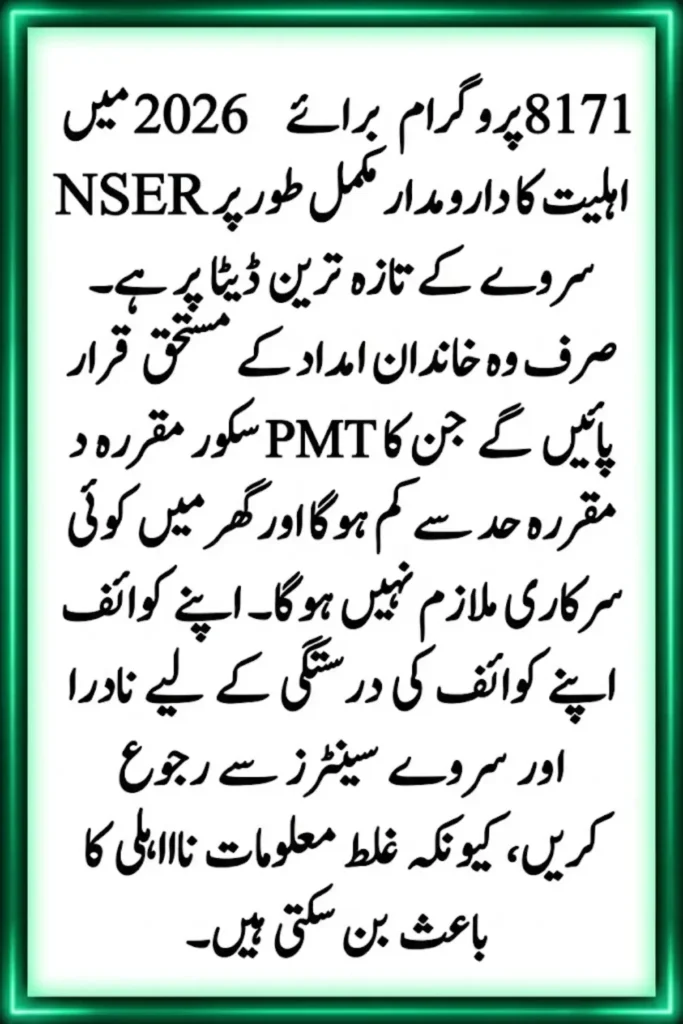
The 8171 Program New Update Announced for 2026 has continued under the supervision of the Benazir Income Support Programme to ensure that financially vulnerable households across Pakistan remain properly identified and supported through a transparent and data-based system. With rising living expenses and economic pressure on low-income communities, the government is focusing on updating household records through the National Socio-Economic Registry (NSER) survey so that only genuinely deserving families are included in the assistance framework. This phase is not a new program but a structured continuation and data verification cycle designed to review existing beneficiaries and register newly eligible households whose financial conditions may have changed.

YOU CAN ALSO READ: Maryam Ko Bataye Web Portal 2026: Online Registration & Rs 10,000 Ramadan Support

Why 8171 Registration Is Important in 2026

Accurate data is the foundation of fair financial assistance. The 2026 update emphasizes fresh household surveys, correct CNIC records, and proper poverty assessment to prevent duplication and ineligible enrollments. Many families who were previously marked ineligible may now qualify if their financial situation has worsened, while those whose economic condition has improved may be reassessed according to the Poverty Means Test (PMT) score system. This score is calculated based on income level, family size, housing condition, and asset ownership.

8171 Program New Update Announced: Check Eligibility, Complete Survey & Confirm Your Payment Status

The goal is simple: assistance must reach households living below the official poverty threshold without political influence or manual selection.

YOU CAN ALSO READ: Maryam Ko Batain Rs 10,000 2026: Your Complete Guide to Fast and Secure JazzCash Payment

Eligibility Criteria for 8171 Assistance

Eligibility is determined through verified data rather than recommendations. Applicants must:

  • Be a Pakistani citizen with a valid CNIC
  • Complete or update the NSER survey
  • Fall below the official PMT score threshold
  • Have no government employee in the household
  • Does not own significant registered assets or large businesses

Priority is generally given to widows, disabled individuals, unemployed persons, and families without a stable source of income. Any incorrect or incomplete information may lead to delays or disqualification.

Role of CNIC and NADRA Verification

Identity verification plays a critical role in the approval process. All applicant data is cross-checked with the records of NADRA to confirm CNIC validity and biometric information. If a CNIC is expired or fingerprints are not properly updated, the applicant may face payment delays. Therefore, it is important to ensure personal and family records are accurate before completing registration.

YOU CAN ALSO READ: Ramzan 2026 Family Support Cash Program: Apply Online and Receive Funds Fast

Step-by-Step Registration Process

  1. Visit the nearest designated registration center.
  2. Complete the NSER survey with accurate household details.
  3. Provide valid CNIC information for verification.
  4. Wait for data confirmation through official channels.

There is no registration fee. Applicants should avoid agents or third parties claiming to guarantee approval.

How to Check 8171 Eligibility Status

Applicants can check their status easily through SMS:

  • Type your 13-digit CNIC number (without dashes).
  • Send it to 8171.
  • Wait for the official reply message.

Responses may indicate eligible, ineligible, or under review. Only messages received from 8171 should be considered authentic.

Payment Disbursement System

Approved beneficiaries receive financial assistance through secure and authorized channels such as partner banks and biometric-enabled payment centers. Biometric verification is required at the time of payment collection to ensure funds are delivered to the correct person. Payment schedules are communicated through official SMS notifications.

YOU CAN ALSO READ: 8070 Ramzan Package Online Registration, CNIC Check & Rs 10,000 Payment Details 2026

Transparency and Monitoring

To maintain accountability, the system uses digital monitoring, automated data cross-checking, and verification mechanisms. Complaint facilities are available for individuals facing survey errors, blocked payments, or incorrect eligibility status. These safeguards help protect public funds and strengthen trust in the welfare system.

Important Instructions for Applicants

  • Ensure CNIC is valid and not expired.
  • Provide honest and accurate household information.
  • Do not pay any fee for registration or eligibility confirmation.
  • Rely only on official 8171 SMS communication.

Conclusion

The 8171 registration update for 2026 reflects Pakistan’s continued effort to maintain a structured and transparent financial assistance framework for low-income families. Through updated surveys, PMT-based eligibility assessment, biometric verification, and secure payment systems, the program aims to ensure that support reaches deserving households without delay or misuse. Families experiencing financial hardship are encouraged to complete their survey updates responsibly and stay informed through official channels to secure timely assistance.

YOU CAN ALSO READ: Wazir-e-Azam Relief Package Complete Registration Process & Latest Payment Update 2026

Ramzan 2026 Family Support Cash Program: Apply Online and Receive Funds Fast

Ramzan 2026 Family Support Cash Program: Apply Online and Receive Funds Fast

Ramzan 2026 Family Support Cash Program

Ramzan 2026 Family Support Cash Program: is a month of devotion and giving, but for many families, rising prices make it hard to cover daily needs. To help, the government has launched a cash assistance program for Ramzan 2026. Eligible households can receive financial support to buy essentials and manage expenses during the holy month.

This guide explains how to check eligibility, the benefits offered, and provides useful tips to get assistance quickly.

What the Ramzan 2026 Support Program Provides

The 2026 support program offers direct cash assistance to families with low income. It aims to reduce the financial burden of groceries, utilities, and other basic expenses during Ramzan.

YOU CAN ALSO READ: 8070 Web Portal Registration 2026: Verify Your Eligibility for Government Relief Package

Ramzan 2026 Family Support Cash Program: Apply Online and Receive Funds Fast

The program works digitally, which makes verification faster and reduces paperwork. Families already registered in social welfare databases can check their eligibility online, while new applicants can update their information through official channels.

FeatureDetails
Cash AssistanceRs. 13,000 per household
BeneficiariesLow-income and vulnerable families
VerificationCNIC check on official portal
PurposeHelp families cover Ramzan expenses

YOU CAN ALSO READ: How to Verify 8070 Ramzan Package Payment Online Status Check & Registration

How to Check Eligibility Online

Families can verify their eligibility without visiting any office. The process is simple:

  1. Go to the Official Website
    Open your web browser and visit the government portal. Avoid unofficial links.
  2. Enter Your CNIC
    Type your 13-digit CNIC without dashes. Accuracy is important.
  3. Submit the Form
    The portal will show your status as eligible, under review, or not eligible.
  4. Keep a Record
    Save any reference number or confirmation message for future use.

This system ensures that assistance reaches eligible families quickly and safely.

Who Can Receive Cash Assistance

Eligibility is based on government records. Families most likely to qualify include:

  • Households with low income
  • Families already registered in welfare programs
  • Recipients of other government aid
  • Families with high social vulnerability scores

Families who may not qualify include:

  • High-income earners or government employees with large salaries
  • Tax filers with significant income
  • Owners of large businesses or property
  • Households with incomplete or incorrect information in official databases

Checking your CNIC online is the easiest way to know if you qualify.

YOU CAN ALSO READ: Suzuki Cultus 2026 Pakistan Price, Specs, Mileage & Top Variants Guide

Benefits of the Ramzan 2026 Support Program

The program offers more than just money. It provides transparency and peace of mind for families:

  1. Direct Cash Payment
    Eligible families receive Rs. 13,000 to cover essentials.
  2. No Fees
    Checking eligibility and receiving cash is free.
  3. Fast Digital Process
    The online system reduces queues and delays.
  4. Reliable Support
    The government manages payments to ensure assistance reaches those in need.

Common Issues and Solutions

Sometimes applicants face small problems. Here is how to solve them:

ProblemSolution
Portal not openingTry another browser, check your internet, visit during off-peak hours
Status shows “Not Eligible”Double-check CNIC, update household information, wait for next review
Status shows “Under Verification”Wait a few days, check again, make sure your phone number is active

Updating Household Information

If your household is not listed or your information is outdated, update it through the National Socio-Economic Registry (NSER). Accurate data ensures inclusion in this and future programs.

YOU CAN ALSO READ: Maryam Ko Bataye Web Portal 2026: Online Registration & Rs 10,000 Ramadan Support

How to Avoid Scams

During relief programs, scams are common. Protect yourself by:

  • Never paying any fee to check eligibility
  • Not sharing OTPs or personal information
  • Using only official portals and government hotlines
  • Reporting suspicious calls or messages immediately

Following these steps ensures you get assistance safely.

Tips for a Smooth Application

  1. Check Your Records
    Make sure your CNIC and household information is correct.
  2. Keep Your Phone Active
    Verification may require your registered number.
  3. Stay Updated
    Watch official announcements for updates on eligibility and payment dates.
  4. Help Family Members
    Share information so others in your household can also apply if eligible.

Conclusion

The Ramzan 2026 cash assistance program provides vital support to families in need. With Rs. 13,000 per eligible household, families can manage essential expenses during the holy month.

Eligibility can be checked quickly through the official portal. Keeping accurate records, staying informed, and using only official channels ensures smooth access to this support. This program is an important step toward helping vulnerable families during Ramzan.

YOU CAN ALSO READ: Maryam Ko Batain Rs 10,000 2026: Your Complete Guide to Fast and Secure JazzCash Payment

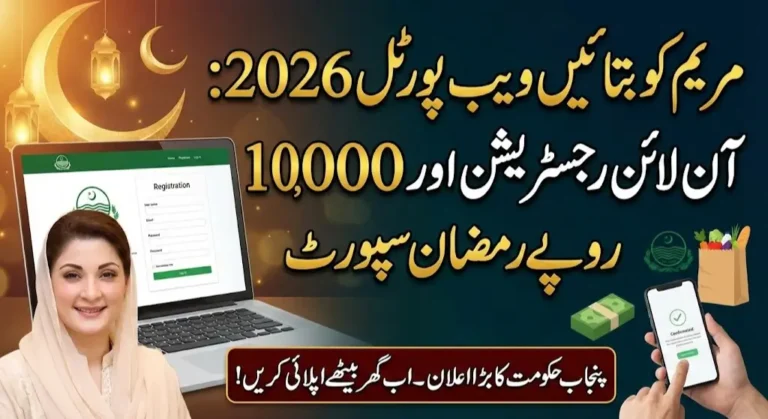
Maryam Ko Bataye Web Portal 2026: Online Registration & Rs 10,000 Ramadan Support

Maryam Ko Bataye Web Portal 2026: Online Registration & Rs 10,000 Ramadan Support

Maryam Ko Bataye Web Portal

Maryam Ko Bataye Web Portal: The holy month of Ramadan brings spiritual peace, but for many low-income families, it also brings financial pressure. Rising food prices, utility bills, and daily household expenses make it difficult for struggling households to manage basic needs. To address this challenge, the Government of Punjab, under the leadership of Maryam Nawaz, has introduced the Maryam Ko Bataye Web Portal 2026, designed to provide Rs 10,000 Ramadan support to deserving families.

This initiative focuses on transparency, quick processing, and easy access. Instead of long queues and complicated paperwork, eligible citizens can now apply online from their homes. The program aims to ensure that financial aid reaches the right people before and during Ramadan so families can observe the month with dignity and peace of mind.

YOU CAN ALSO READ: Punjab Smart Ration Card 2026 District-Wise Beneficiary Portal & Full Registration Guide

Maryam Ko Bataye Web Portal 2026: Online Registration & Rs 10,000 Ramadan Support

What Is the Maryam Ko Bataye Web Portal 2026?

The Maryam Ko Bataye Web Portal 2026 is an online registration system created to facilitate the distribution of Ramadan financial assistance. It allows citizens to submit their information digitally, checktheir eligibility status, and receive updates regarding their application.

This portal is part of the provincial government’s broader relief strategy for 2026. By digitizing the process, authorities aim to minimize corruption, eliminate middlemen, and ensure direct benefit transfer to verified individuals. The Rs 10,000 grant is intended to support families in purchasing essential food items such as flour, sugar, rice, cooking oil, and other necessities during Ramadan.

YOU CAN ALSO READ: 8171 BISP March–Eid 2026 Update: Fresh Registration Guide, Rs. 13,500 Payment and Festival Cash Support Explained

Objectives of the Rs 10,000 Ramadan Support Program

The program is not just about financial aid. It is about protecting vulnerable households during a time of increased expenses. The key objectives include:

  • Providing immediate financial relief before and during Ramadan
  • Supporting low-income families facing inflation
  • Ensuring transparent and digital verification
  • Reducing overcrowding at government offices
  • Promoting dignity through direct cash transfers

The government aims to process applications quickly so beneficiaries can receive funds without unnecessary delays.

Who Is Eligible for the Program?

Eligibility is based on income level, financial condition, and verification through national databases. The assistance is targeted toward families who genuinely need support.

Below is a general eligibility overview:

CriteriaDetails
Income LevelLow-income or daily wage earners
Employment StatusUnemployed or informal workers
Government EmploymentNot eligible if a permanent government employee
Existing AidPreference for families not receiving multiple aid programs
CNIC VerificationMust have a valid Pakistani CNIC

Applicants must ensure that their CNIC information is correct and up to date before applying.

Who May Not Qualify?

To maintain fairness, certain applicants may not be approved. These may include:

  • Individuals with high monthly income
  • Government employees with stable salaries
  • Families already receiving significant government subsidies
  • Those providing incorrect or fake information

Providing accurate data is extremely important because verification checks are strict and digitally monitored.

YOU CAN ALSO READ: 9999 Ramzan Assistance 2026 Complete Guide to PM Relief Cash & Ration Support in Pakistan

Step-by-Step Guide to Online Registration

Applying through the Maryam Ko Bataye Web Portal is designed to be simple and user-friendly. Follow these steps carefully:

Step 1: Visit the Official Portal

Open the official Maryam Ko Bataye Web Portal using your mobile phone, tablet, or computer.

Step 2: Enter Your CNIC Number

Provide your valid 13-digit CNIC number without dashes. Make sure the number is correct before submission.

Step 3: Fill in Personal Details

You will be asked to enter basic information such as:

  • Full name
  • Mobile number
  • Residential address
  • Family size
  • Monthly income details

Step 4: Submit the Application

After reviewing your information, submit the form online.

Step 5: Receive Confirmation

You will receive a confirmation message or tracking reference number. Keep this for future reference.

The verification process may take a few days. Once approved, you will receive further instructions regarding the payment method.

YOU CAN ALSO READ: Maryam Ko Batain Digital Portal 2026 Step-by-Step Online Support and Rs 10,000 Ramadan Aid

How Will the Rs 10,000 Be Distributed?

The financial support will be distributed through secure and transparent payment channels. The aim is to avoid delays and ensure safe transfer of funds.

Possible distribution methods include:

  • Direct bank transfer
  • Designated payment centers
  • Mobile wallet services
  • Official collection points announced by the authorities

Beneficiaries will be informed about the exact method once their application is approved.

Required Documents and Information

Although the process is online, you should keep certain documents ready:

  • Original CNIC
  • Registered mobile number
  • Proof of residence (if required)
  • Income-related details

In some cases, applicants may be contacted for additional verification. It is important to provide a working mobile number to receive updates.

Common Mistakes to Avoid During Registration

Many applications face delays because of simple mistakes. To improve your chances of approval, avoid the following errors:

  • Entering incorrect CNIC number
  • Using someone else’s mobile number
  • Providing false income details
  • Submitting incomplete forms
  • Applying multiple times from the same CNIC

Submitting accurate and complete information ensures smoother processing.

YOU CAN ALSO READ: Punjab Solar Tubewell Initiative 2026: Transforming Farming in Punjab

How to Check Your Application Status

After submitting your application, you may want to track its progress. The portal allows applicants to check their status online.

To check your status:

  1. Visit the official web portal
  2. Enter your CNIC number
  3. Click on the “Check Status” option
  4. View your application result

If approved, you will see instructions regarding payment collection or bank transfer. If rejected, the system may provide a reason.

Benefits of the Digital Web Portal System

The introduction of the Maryam Ko Bataye Web Portal has modernized the relief process. Some major benefits include:

  • No long queues at offices
  • Faster application processing
  • Reduced corruption and favoritism
  • Equal opportunity for all applicants
  • Digital tracking and transparency

This system reflects a shift toward technology-based governance, making public services more accessible and efficient.

YOU CAN ALSO READ: 8070 Web Portal Registration 2026: Verify Your Eligibility for Government Relief Package

Importance of Ramadan Financial Assistance in 2026

Inflation continues to affect essential commodities across Pakistan. During Ramadan, household spending increases due to higher food consumption and religious gatherings. For daily wage earners and unemployed individuals, managing these expenses becomes extremely difficult.

The Rs 10,000 assistance may not cover all expenses, but it provides meaningful relief. It allows families to buy essential groceries and manage basic household needs without borrowing money or facing financial stress.

Frequently Asked Questions

Below are answers to common concerns:

Is the application completely online?
Yes, the primary registration process is digital to reduce physical visits.

Is there any registration fee?
No, the registration is completely free.

How long does verification take?
Verification may take several days depending on application volume.

Can I apply if I already receive another program?
Eligibility depends on the nature of existing assistance and your financial profile.

What if my application is rejected?
You may check the reason and reapply if the issue can be corrected.

YOU CAN ALSO READ: How to Verify 8070 Ramzan Package Payment Online Status Check & Registration

Transparency and Accountability Measures

The government has emphasized strict monitoring to prevent misuse of funds. Digital databases are cross-checked to confirm income status and eligibility. This ensures that the financial aid reaches only deserving families.

Authorities may also conduct random audits and verification checks. Any attempt to provide false information can result in disqualification and possible legal action.

Final Thoughts on the Maryam Ko Bataye Web Portal 2026

The Maryam Ko Bataye Web Portal 2026 represents a significant step toward digital welfare distribution in Punjab. By offering Rs 10,000 Ramadan support through an online registration system, the government has made the process more accessible, transparent, and efficient.

For thousands of struggling families, this assistance can ease financial pressure during the holy month. The key to benefiting from the program lies in submitting accurate information, following the correct registration steps, and staying updated through official channels.

As Ramadan approaches, eligible families should complete their applications early to avoid last-minute delays. Programs like this not only provide financial support but also reflect a commitment to social responsibility and public welfare.

With careful implementation and honest participation, the Maryam Ko Bataye Web Portal 2026 has the potential to bring real relief to those who need it most.

YOU CAN ALSO READ: Suzuki Cultus 2026 Pakistan Price, Specs, Mileage & Top Variants Guide

Punjab Solar Tubewell Initiative 2026: Transforming Farming in Punjab

Punjab Solar Tubewell Initiative 2026: Transforming Farming in Punjab

Punjab Solar Tubewell Initiative

The Punjab Solar Tubewell Initiative government has launched a revolutionary program for farmers aimed at reducing irrigation costs, promoting renewable energy, and improving agricultural productivity. Known as the Punjab Solar Tubewell Initiative 2026, this project is set to transform traditional irrigation practices across the province.

With rising diesel prices and frequent electricity outages, farmers have been facing major hurdles in maintaining their crops. This government-backed scheme provides financial support of up to 80% for converting diesel or electric tubewells to solar-powered systems. March 2026 registration is open, and authorities are prioritizing transparent, phased application processing.

YOU CAN ALSO READ: CM Punjab Bewa Sahara Card 2026 Financial Support Program for Widows

Understanding the Punjab Solar Tubewell Initiative

The Punjab Solar Tubewell Initiative 2026 is a strategic program designed to help farmers adopt sustainable irrigation solutions. Instead of relying on costly diesel engines or unstable electricity supply, farmers can now install solar panels to operate tubewells.

The government subsidizes a major portion, up to 80% of installation costs, while farmers contribute the remaining 20%. Each district will oversee applications and ensure that only eligible candidates receive support.

Why This Program Is Vital for Punjab’s Farmers

Punjab is the backbone of Pakistan’s agriculture, but rising fuel costs and inconsistent power supply have been affecting crop production. Farmers face:

  • Escalating diesel prices
  • Load shedding during peak irrigation periods
  • High electricity bills
  • Reduced crop yields

The solar tubewell initiative addresses these issues by providing a reliable, cost-effective, and environmentally friendly solution.

Punjab Solar Tubewell Initiative 2026: Transforming Farming in Punjab

YOU CAN ALSO READ: Education Secured in 2026: Inside the New BISP Taleemi Wazaif Payment System

https://i.brecorder.com/primary/2024/12/675a1d9851158.jpg

Core Objectives of the Solar Tubewell Initiative

The project has been designed with multiple goals in mind:

ObjectiveDescription
Reduce operational costsFarmers save on diesel and electricity bills
Encourage renewable energyPromote solar energy adoption for sustainable farming
Ensure continuous irrigationSolar tubewells provide water supply during daylight hours
Support small & medium farmersFinancial assistance prioritizes landholders with limited resources
Enhance food securityReliable irrigation increases crop yields and provincial output

This initiative is not just a subsidy, but a long-term investment in sustainable agricultural practices across Punjab.

YOU CAN ALSO READ: 9999 Ramzan Secret 2026: Punjab Families Can Unlock Rs 10,000 + Free Ration With Just One SMS

Registration Process March 2026 Open

According to government sources, the Punjab Solar Tubewell Initiative 2026 has begun its first registration phase. Farmers are advised to submit applications promptly to benefit from the program.

Key Points:

  • Verification will be based on official land records
  • Subsidies will be allocated in phases
  • Only verified and eligible farmers will be approved

Who Can Apply? Eligibility Criteria

Eligibility rules ensure that benefits reach the right beneficiaries. To apply:

  1. Applicants must be residents of Punjab
  2. Hold a valid CNIC
  3. Own agricultural land with verified ownership documents
  4. Submit only one application per farmer for a subsidized solar tubewell

Priority will be given to small and medium-scale farmers. Incomplete applications are subject to rejection.

https://pakistan.un.org/sites/default/files/styles/large/public/2024-01/340feba1-87b8-468e-8385-0abec5cddcaa%20%282%29.jpg?h=dcd3bcc2&itok=njQ-lZYy

YOU CAN ALSO READ: Punjab Smart Ration Card 2026 District-Wise Beneficiary Portal & Full Registration Guide

Step-by-Step Application Guide

Farmers can apply online or offline, depending on convenience.

Online Application

  1. Visit the official Punjab Agriculture Department website
  2. Navigate to the Solar Tubewell Initiative registration section
  3. Enter CNIC and land details
  4. Upload documents (CNIC copy, land record)
  5. Submit the form and wait for verification

Offline Application

  1. Visit the nearest Agriculture Department office
  2. Collect and complete the application form
  3. Attach the required documents
  4. Submit and retain the acknowledgment slip for records

Tip: Always keep copies of submitted documents for reference and future verification.

Key Benefits of Solar Tubewells

The Punjab Solar Tubewell Initiative 2026 provides multiple benefits:

  1. Significant Cost Reduction – Farmers save on diesel and electricity bills
  2. Reliable Irrigation – Ensures crops receive timely watering during the day
  3. Minimal Maintenance – Solar systems require less maintenance than diesel engines
  4. Environmental Impact – Reduced carbon emissions and air pollution
  5. Financial Stability – Lower operational costs improve farmers’ profit margins

Comparing Diesel vs Solar Tubewells

FeatureDiesel TubewellSolar Tubewell
Energy SourceDiesel fuelSunlight
Running CostHigh and fluctuatingMinimal, free
MaintenanceFrequent and expensiveLow maintenance
ReliabilityDependent on fuel availabilityDaylight hours, consistent
SubsidyNone or limitedUp to 80% under government scheme

Switching to solar reduces long-term expenses while promoting eco-friendly agriculture.

YOU CAN ALSO READ: 8171 BISP March–Eid 2026 Update: Fresh Registration Guide, Rs. 13,500 Payment and Festival Cash Support Explained

https://images.indianexpress.com/2024/07/Solar-Tubewell.jpg?w=1200

Challenges and Considerations

While the scheme is promising, some challenges exist:

  • Remaining 20% cost may still be high for very small farmers
  • Awareness in rural areas is limited
  • Technical knowledge is needed to maintain solar systems
  • Ensuring transparent allocation is critical for fair distribution

The government is planning awareness campaigns and technical support to overcome these challenges.

Future Expansion Plans

Punjab officials have indicated that the program may expand if the first phase succeeds. Possible developments include:

  • Extending subsidy coverage to more farmers
  • Introducing bank financing options for small farmers
  • Incorporating smart irrigation technologies
  • Promoting water conservation and sustainable farming practices

Effective implementation could revolutionize Punjab’s agricultural landscape in the coming years.

YOU CAN ALSO READ: 9999 Ramzan Assistance 2026 Complete Guide to PM Relief Cash & Ration Support in Pakistan

FAQs

1. How much subsidy is available?
Farmers can receive up to 80% subsidy on solar tubewell installations

2. Who is eligible to apply?
Farmers residing in Punjab with verified land ownership and a valid CNIC

3. How can applications be submitted?
Applications are accepted online via the Agriculture Department website or offline at local offices

4. Is there a deadline for March 2026 registration?
Early registration is recommended as applications will be processed in phases

5. Can one farmer apply for multiple tubewells?
Punjab Solar Tubewell InitiativePunjab Solar Tubewell Initiative

Conclusion

The Punjab Solar Tubewell Initiative 2026 is a game-changing program for the agricultural sector. By cutting irrigation costs, promoting renewable energy, and supporting small and medium farmers, it offers both immediate and long-term benefits.

For farmers, this is more than just a financial subsidy it is an opportunity to embrace sustainable farming, increase crop productivity, and secure long-term savings. Eligible farmers are encouraged to apply early to benefit from this government-backed initiative and be part of Punjab’s green agricultural revolution.

YOU CAN ALSO READ: Maryam Ko Batain Digital Portal 2026 Step-by-Step Online Support and Rs 10,000 Ramadan Aid