
Federal Government Introduces Fixed
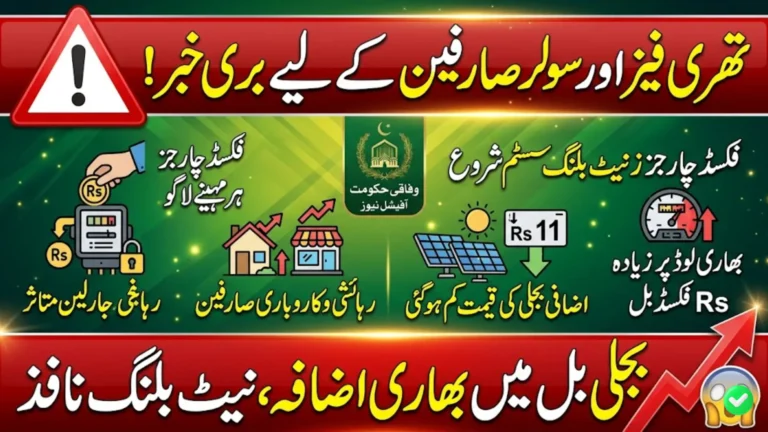
The federal government introduces fixed charges for three-phase electricity consumers across Pakistan. These charges apply to both residential and commercial users. Consumers with solar systems will also be affected. The new fees will be included in electricity bills from this month. This policy mainly targets connections with higher sanctioned loads.
The decision comes along with the Solar Consumers Regulations 2026. The government has also replaced net metering with a net billing system. This change affects how solar electricity is calculated. Many users in private housing societies may see higher monthly bills.
8171 Dynamic Registration 2026 Online Apply, Eligibility, Documents, and Status
- Fixed charges apply to three-phase connections
- Residential and commercial users are included
- Solar consumers are also affected
- Bills will increase for higher loads
New Fixed Charges for Three-Phase Electricity Consumers
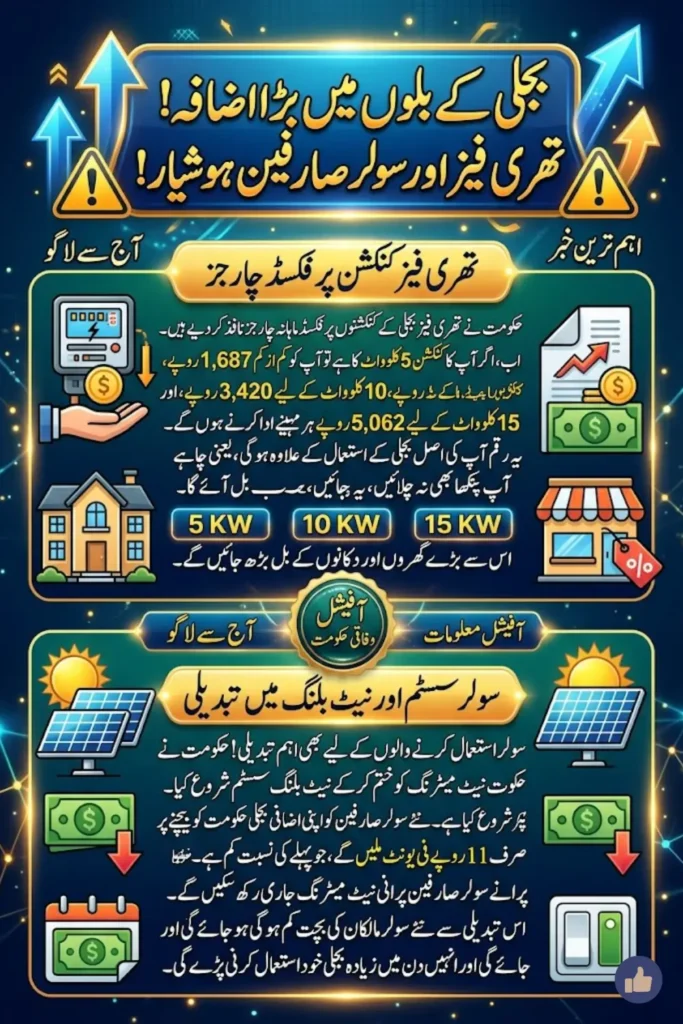
The fixed charges are based on the approved load capacity. Consumers with higher load connections must pay higher minimum charges. These charges apply even if electricity usage is low. This means users will pay a fixed amount every month. The policy ensures a stable revenue system for power distribution companies.
The new charges mainly impact large homes and businesses. Three-phase meters are usually installed for heavy electricity use. Consumers with these connections will now pay fixed charges regardless of units consumed. This change may increase financial pressure on users.
BISP 8171 2026 Complete Guide: Eligibility, Registration, Payment Check and Latest Updates
| Load Capacity | Fixed Monthly Charge |
|---|---|
| 5 Kilowatt | Rs 1,687 |
| 10 Kilowatt | Rs 3,420 |
| 15 Kilowatt | Rs 5,062 |
| Above 15 KW | Higher charges apply |
- 5 KW load charged Rs 1,687
- 10 KW load charged Rs 3,420
- 15 KW load charged Rs 5,062
- Higher loads pay more
Impact on Residential and Commercial Consumers
The new fixed charges will affect households with large electricity demands. Homes with air conditioners, motors, and heavy appliances usually use three-phase meters. These consumers will now pay higher fixed costs. Even low consumption months will not reduce the bill.
Businesses will also face increased electricity expenses. Shops, offices, and small industries often use three-phase connections. The fixed charges will increase operating costs. This may lead to higher service prices for customers.
- Private housing societies are most affected
- Large homes will pay higher bills
- Businesses face increased expenses
- Fixed charges apply every month
8171 Web Portal 2026 BISP CNIC Check Online Registration Punjab
Net Billing System for Solar System Users
The government has introduced a net billing system for new solar consumers. Under this system, net metering will no longer apply to new users. Previously, solar users could offset exported units. Now surplus electricity will be sold at a fixed rate. This changes how savings are calculated.
The new system encourages self-consumption of solar power. Users will benefit more by using electricity directly. Exported units will be purchased at Rs. 11 per unit. This rate is lower than the retail electricity price. As a result, savings may decrease for new solar users.
- Net metering is replaced for new users
- Surplus electricity rate Rs 11 per unit
- Self-consumption becomes important
- Savings reduced for new installations
Impact of Net Billing on Solar Consumers
Solar users will see changes in their financial benefits. Under net billing, exported electricity earns less money. Consumers must use solar energy during the daytime. This helps maximize savings. Otherwise, exported units will generate a limited return.
Existing solar consumers will remain under the old system. They will continue using net metering. Only new solar installations fall under net billing. This ensures protection for current users. However, future solar adoption may slow down.
Sindh Subsidy Program 2026: Relief for Transport Operators and Small Farmers Amid Rising Fuel Prices
| System Type | Previous Net Metering | New Net Billing |
|---|---|---|
| Export Units | Sold at Rs 11 | Continue the old system |
| Savings | Higher | Lower |
| Self Consumption | Less important | More important |
| Existing Users | Continue old system | Not affected |
- Existing users stay on net metering
- New users shifted to net billing
- Exported units sold at a fixed rate
- Solar payback period may increase
Solar Consumers Regulations 2026 Overview
The Solar Consumers Regulations 2026 aim to regulate solar growth. The policy introduces a structured compensation system. The government wants to manage grid stability. This also ensures fair distribution of electricity costs. The regulations focus mainly on new solar users.
The shift from net metering to net billing is the key change. Under the new rules, solar users will receive a fixed payment. This reduces the burden on the national grid. It also encourages consumers to use the generated electricity themselves.
- Solar regulations were introduced in 2026
- Net billing system implemented
- Fixed rate for surplus electricity
- Encourages self-consumption
8171 Online Registration Form 2026 Step-by-Step Guide to Apply and Check Status
NEPRA Approval for Fixed Charges and Net Billing
The new fixed charges and net billing system were approved by NEPRA. The regulator aims to improve energy sector management. These changes help balance electricity demand. It also ensures fair cost sharing among consumers.
NEPRA’s approval highlights the importance of renewable energy regulation. Solar energy adoption is increasing rapidly. The new framework controls financial impact on the grid. It also supports long-term energy planning.
- NEPRA approved new charges
- Net billing system implemented
- Solar users regulated under new rules
- Energy sector management improved
Conclusion
The introduction of fixed charges for three-phase electricity consumers will increase monthly bills. Households and businesses with higher loads will be affected the most. The charges apply regardless of electricity usage. This ensures fixed revenue for power companies.
The shift from net metering to net billing also impacts solar users. New consumers will receive Rs 11 per unit for surplus electricity. Existing users remain protected under the old system. These changes will influence future solar adoption and electricity usage.
BISP 8171 Online Registration Complete Guide 2026: Eligibility, Documents, Payment and Apply Process
FAQs
What are fixed charges for three-phase electricity consumers?
These are monthly charges based on sanctioned load. They apply even if the electricity consumption is low.
What is the new rate for surplus solar electricity?
Under net billing, surplus electricity is purchased at Rs 11 per unit. This applies to new solar users.
Will existing solar users shift to net billing?
No, existing solar consumers will continue using net metering. Only new users fall under net billing.
Who will be affected by the new fixed charges?
Residential and commercial users with three-phase connections. High-load consumers will see higher bills.
When will the new charges appear in bills?
The new fixed charges will appear from this month. Consumers will see them in upcoming electricity bills.
More info: Punjab Safe Cities Authority Alert on Fraudulent E-Challan SMS PSCA Warns About Fake 8070 Messages