NSER CNIC Registration Explained
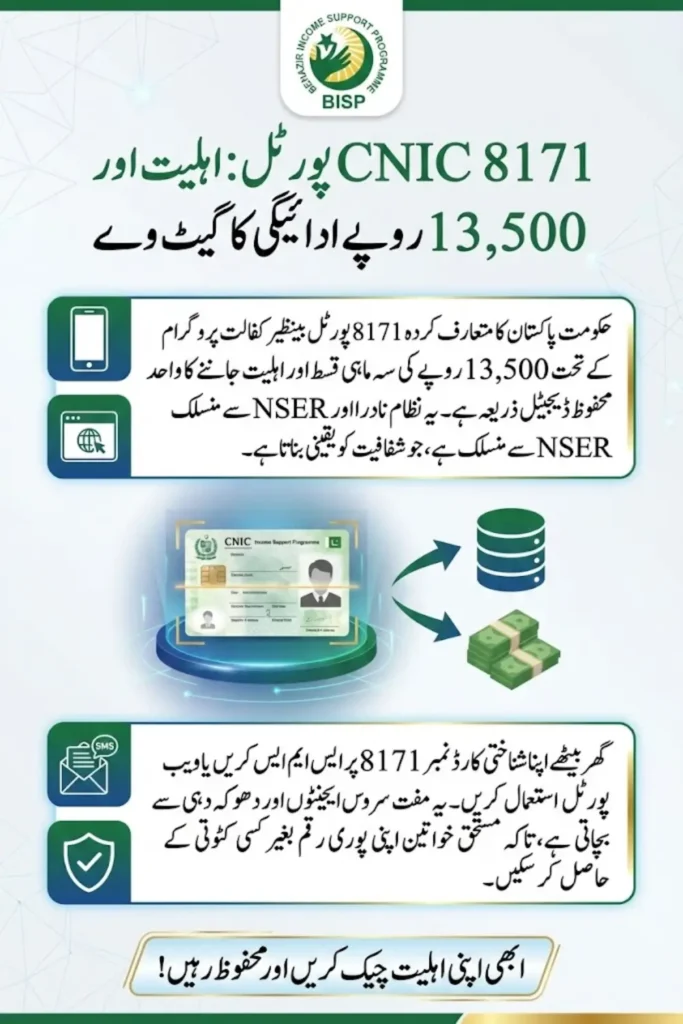
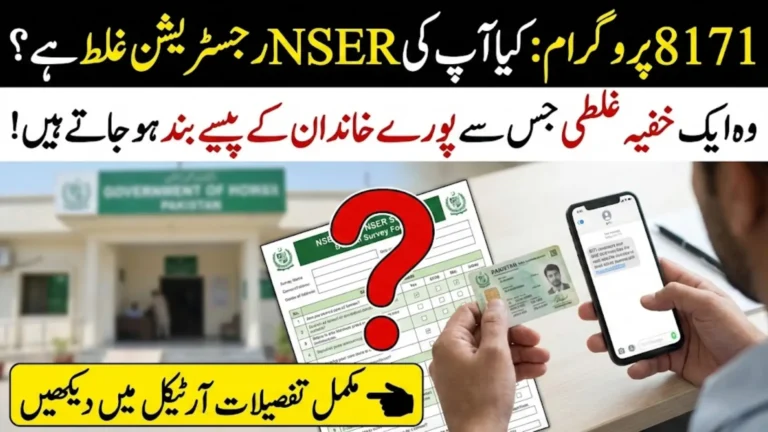
NSER CNIC Registration Explained in the National Socio-Economic Registry (NSER) is the foundation for accessing government welfare programs in Pakistan, especially the Benazir Income Support Programme (BISP) 8171. Without proper NSER registration, families are automatically excluded from financial assistance, regardless of their financial condition.
NSER is not just a formality. It is a structured national survey that evaluates a household’s economic status using verified data. This information directly impacts whether a family qualifies for cash support now or in the future.
YOU CAN ALSO READ: Punjab Rs. 3,000 Monthly Food Support Plan 2026: How the New Ration Card Is Changing Household Survival
This guide explains everything you need to know about CNIC registration in NSER, from understanding the system to completing the survey and tracking your status afterward.
Understanding the NSER System and Its Purpose
NSER is a nationwide database that identifies deserving households using a standardized survey method. Instead of relying on manual recommendations, the government assesses families through measurable indicators such as income, housing, assets, and dependency levels.
YOU CAN ALSO READ: 8070 Ramzan Relief Program 2026: How Punjab Digital System Supports Low-Income Families
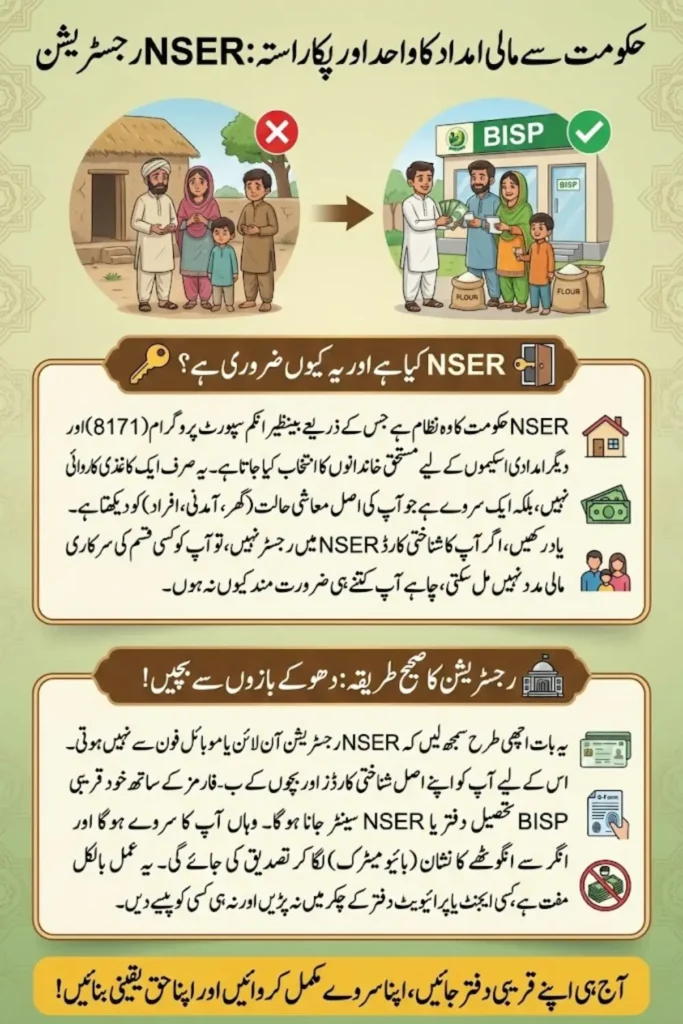
Once a CNIC is registered, the household becomes part of the Dynamic Registry. This registry allows updates whenever there is a major change, such as marriage, death, job loss, or relocation. This ensures that assistance reaches families who genuinely need it.
Why CNIC Registration Is Non-Negotiable
CNIC registration is mandatory because it connects your personal identity with verified national records. Every welfare decision is linked to this data.
Here is why CNIC registration is essential:
- It verifies identity through NADRA
- It enables calculation of the Poverty Means Test score
- It prevents duplicate registrations
- It ensures transparency in government aid distribution
- It determines eligibility for BISP and similar programs
Without a registered CNIC, a household cannot be surveyed or approved under any financial assistance program.
Is NSER CNIC Registration Available Online?
Many applicants assume the process can be completed online, but that is not correct.
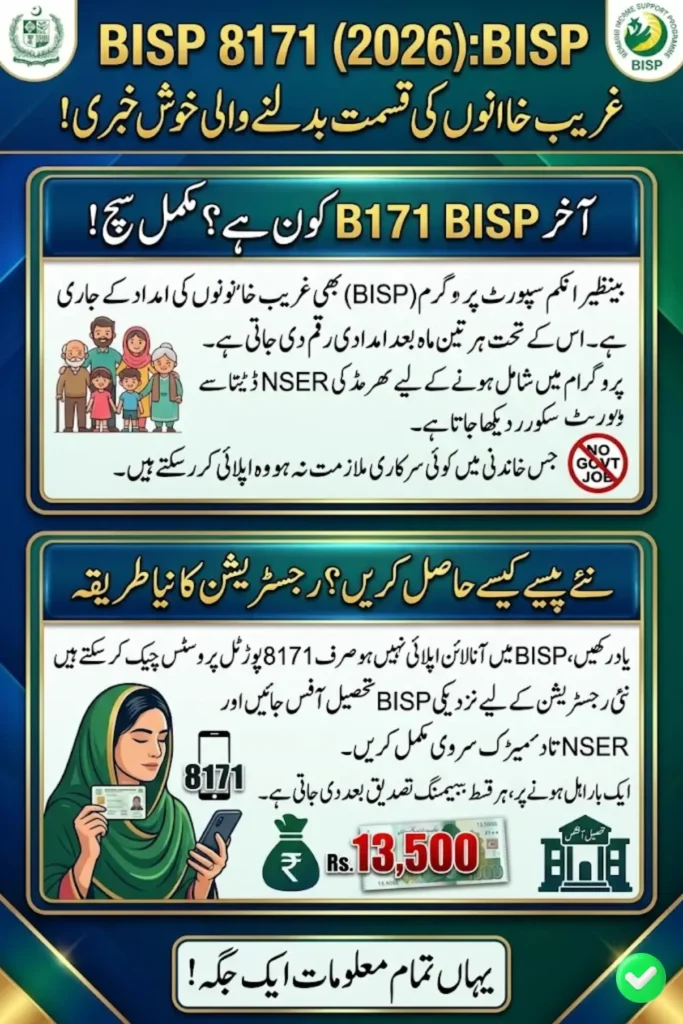
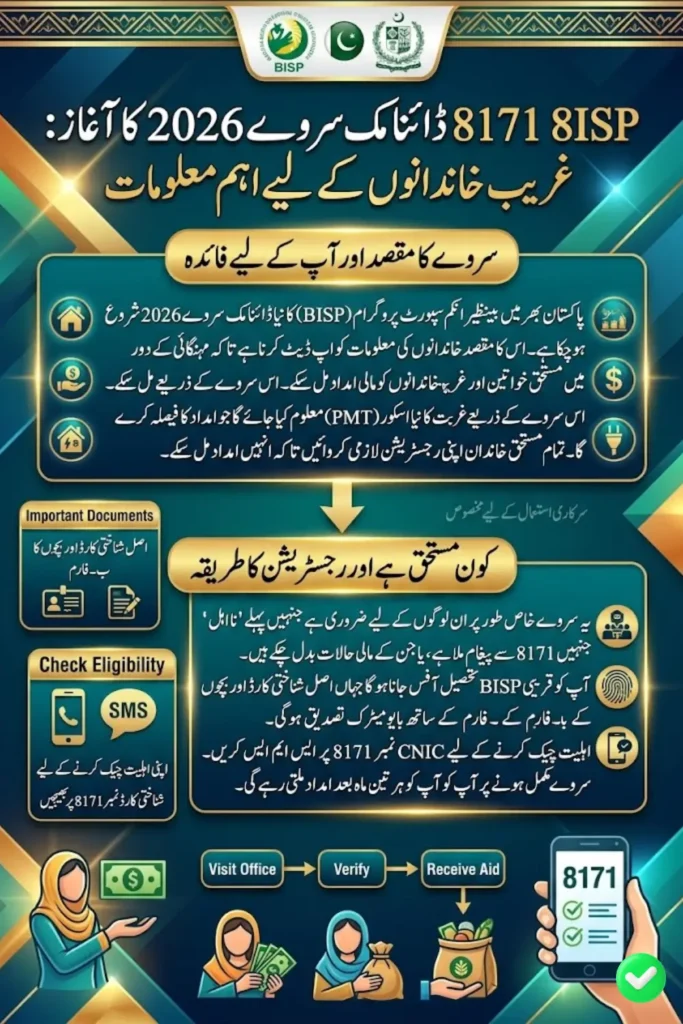
NSER registration cannot be done fully online. Physical presence is required due to biometric verification and original document checks. However, citizens can still check whether their data already exists before visiting a registration center.
YOU CAN ALSO READ: Punjab Moves Toward Smarter Farming With Interest-Free Mechanization Support
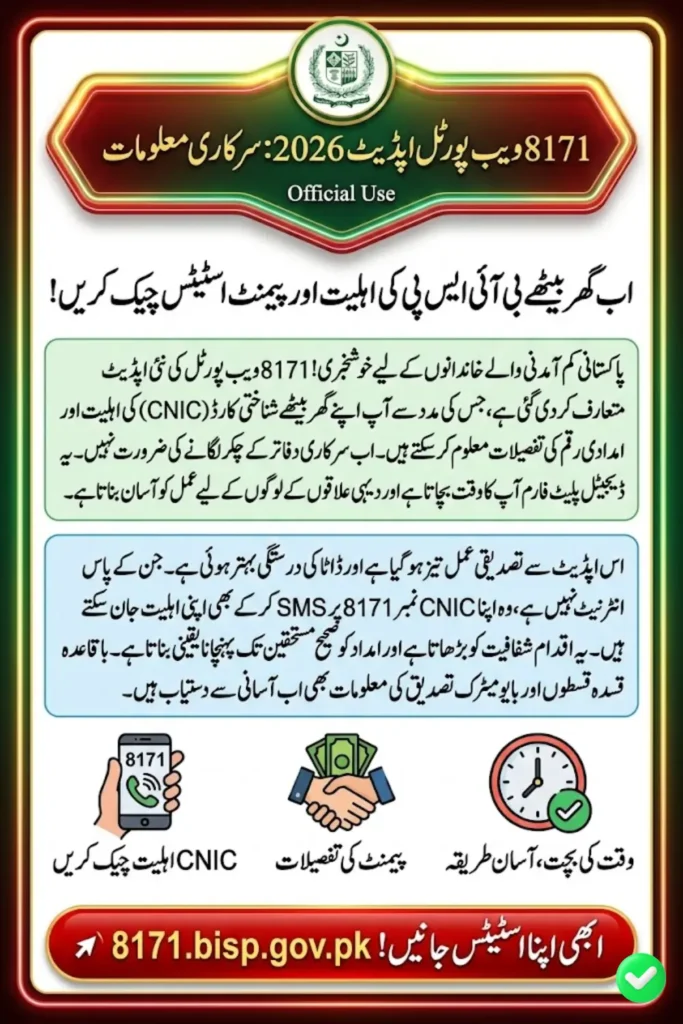
CNIC Status Check Before Visiting a Center
Before going for registration, checking your status can save time.
SMS Method
- Open the mobile SMS app
- Type your 13-digit CNIC number without spaces
- Send it to 8171
What the Reply Means
- If you are asked to visit a registration center, your data is missing or outdated
- If your data exists, you may receive further instructions
This step helps avoid unnecessary visits and long waiting times.
Where to Register CNIC for NSER Survey
To officially register, you must visit an authorized government location.
Approved Registration Locations
- BISP Tehsil Offices
- Designated NSER Dynamic Survey Centers
Always avoid agents or private offices claiming to offer registration services.
YOU CAN ALSO READ: Punjab Green Tractor Scheme Phase 2: A Game Changer for Small and Medium Farmers
Best Time to Visit
- Visit early in the morning
- Choose working days instead of holidays
- Expect longer queues during peak months
Required Documents for NSER CNIC Registration
Carrying complete and original documents is critical for smooth processing.
Mandatory Documents
- Original CNIC of head of household (female head preferred)
- Original CNICs of all adult family members
- Children’s B-Forms or birth certificates
Supporting Documents (If Applicable)
- Utility bill for address confirmation
- Rent agreement for tenants
- Disability certificate
- Death certificate for widows
Missing documents often result in incomplete surveys or repeat visits.
NSER Dynamic Survey Process Explained
Once inside the registration center, the NSER Dynamic Survey begins.
Step 1: Token Collection
A token is issued, and applicants are called according to queue order.
YOU CAN ALSO READ: Punjab Agriculture Enters a New Phase as Mechanization Program 2026 Expands Across the Province
Step 2: Detailed Household Interview
Trained staff record information related to family composition, income, education, health, assets, and housing conditions.
Accuracy is extremely important. Providing incorrect or misleading information can lead to disqualification.
Key Data Collected During NSER Survey
| Category | Information Recorded |
|---|---|
| Family Details | Number of members, relationships, dependents |
| Income | Monthly earnings, employment type |
| Housing | Ownership status, rooms, construction type |
| Education | Literacy and education levels |
| Health | Disabilities and chronic illnesses |
| Assets | Vehicles, land, livestock, business |
This data is used to calculate the household’s eligibility score.
PMT Score and Its Importance
The Poverty Means Test (PMT) score is generated automatically after the survey. It reflects the overall financial condition of the household.
Factors that influence PMT score include income, assets, household size, education, and living conditions. Lower scores generally improve eligibility chances for financial assistance.
Applicants cannot manually change their PMT score, as it is system-generated based on verified data.
Biometric Verification and NADRA Matching
After completing the survey, biometric verification is mandatory.
Thumb impressions are taken and matched with NADRA records to confirm identity. If biometric verification fails due to CNIC issues, re-verification may be required.
YOU CAN ALSO READ: Punjab Introduces High-Tech Farm Mechanization 2026 to Transform Modern Agriculture
Ensuring your CNIC is valid and updated helps avoid delays.
Registration Slip and Why It Matters
After successful biometric verification, a registration acknowledgment slip is issued.
This slip contains a tracking number and serves as proof that your NSER survey has been completed. It is required for follow-ups and future inquiries, so keep it safe.
Final SMS Response from 8171
Once data processing is complete, applicants receive an official SMS from 8171.
Possible responses include:
- Confirmation of successful inclusion
- Request for additional verification
- Instruction for re-survey
Always trust messages only from the official 8171 number.
Common Errors That Reduce Approval Chances
- Providing incorrect income details
- Forgetting original documents
- Not updating family changes
- Losing the registration slip
- Ignoring official SMS notifications
Avoiding these mistakes significantly improves approval chances.
How Long Does NSER CNIC Registration Take?
The survey itself usually takes 30 to 60 minutes. Final processing and SMS confirmation may take several weeks, depending on verification workload.
Patience is important, as approval timelines vary by region.
Final Words
CNIC registration in NSER is not just a requirement; it is the gateway to government financial support. Completing the process carefully, honestly, and with proper documentation ensures your household is accurately assessed.
If your financial condition changes in the future, updating your NSER data keeps your eligibility active and relevant.
YOU CAN ALSO READ: A New Welfare Architecture in Punjab: Understanding the 2026 Poverty Relief Framework